ARCHIVE / PAJALLE
Hyundai Kona · battery
Taking apart and exploring a Kona traction battery: modules, cooling, battery management and opportunities to reuse the components.
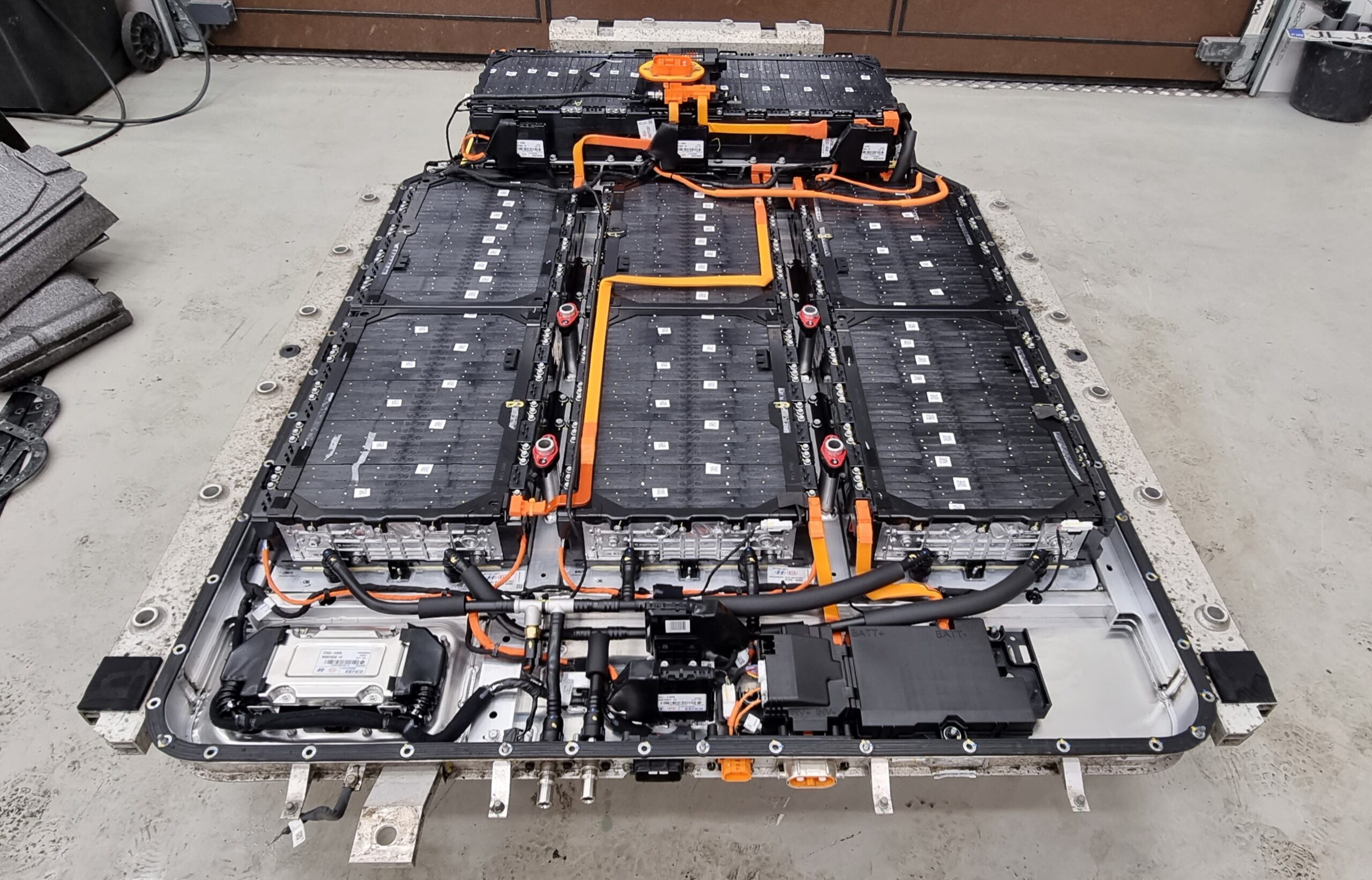
2022-02-02 · A look inside the Kona battery
Last winter, we got a 64 kWh battery from a Hyundai Kona donor car. Other jobs kept it waiting, but just before Christmas we finally got round to a proper look. We hadn't found much information about Kona batteries online, so we had to investigate for ourselves and see what we could build from one.
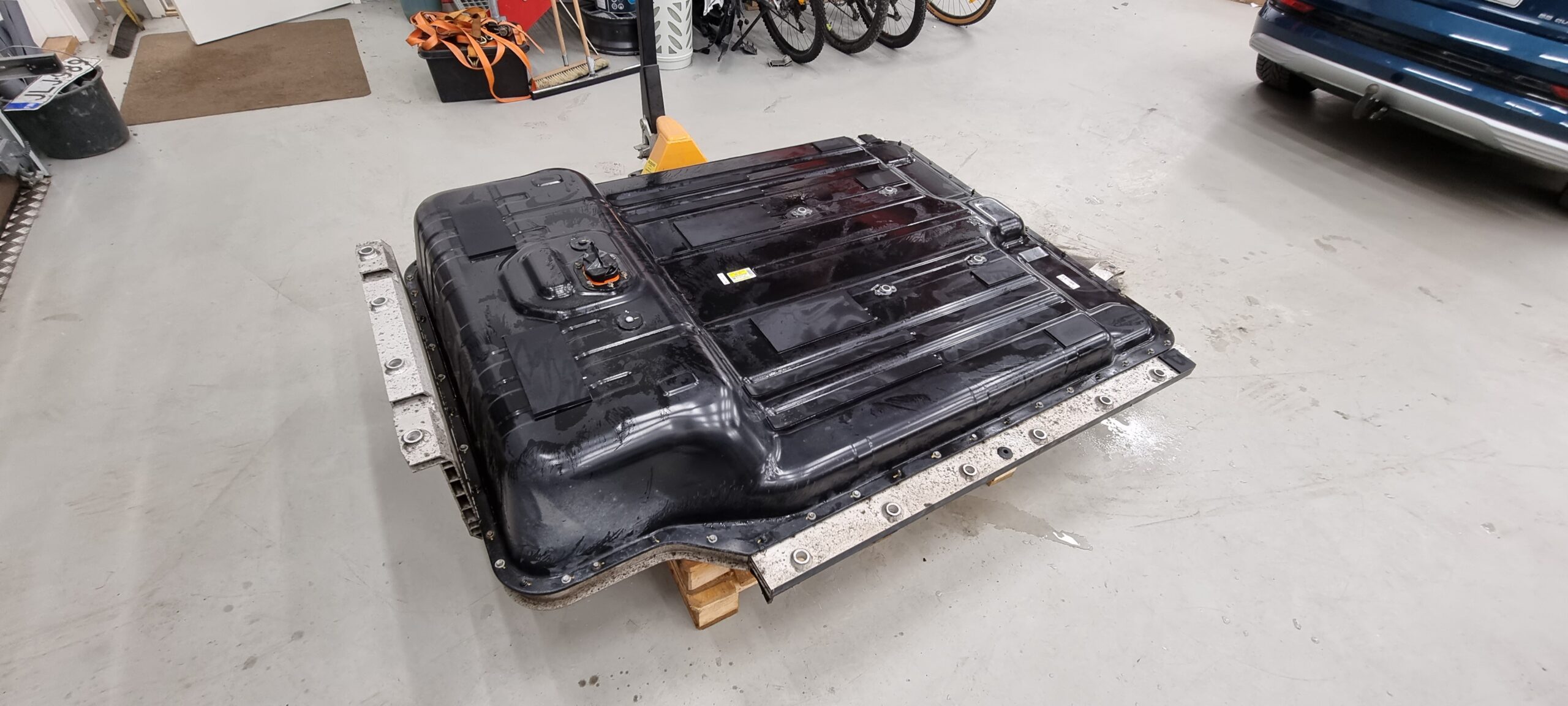
The battery came from a 2018 Kona with about 100,000 km on the clock.
The car’s other parts are available from Autokierrätys L&G.
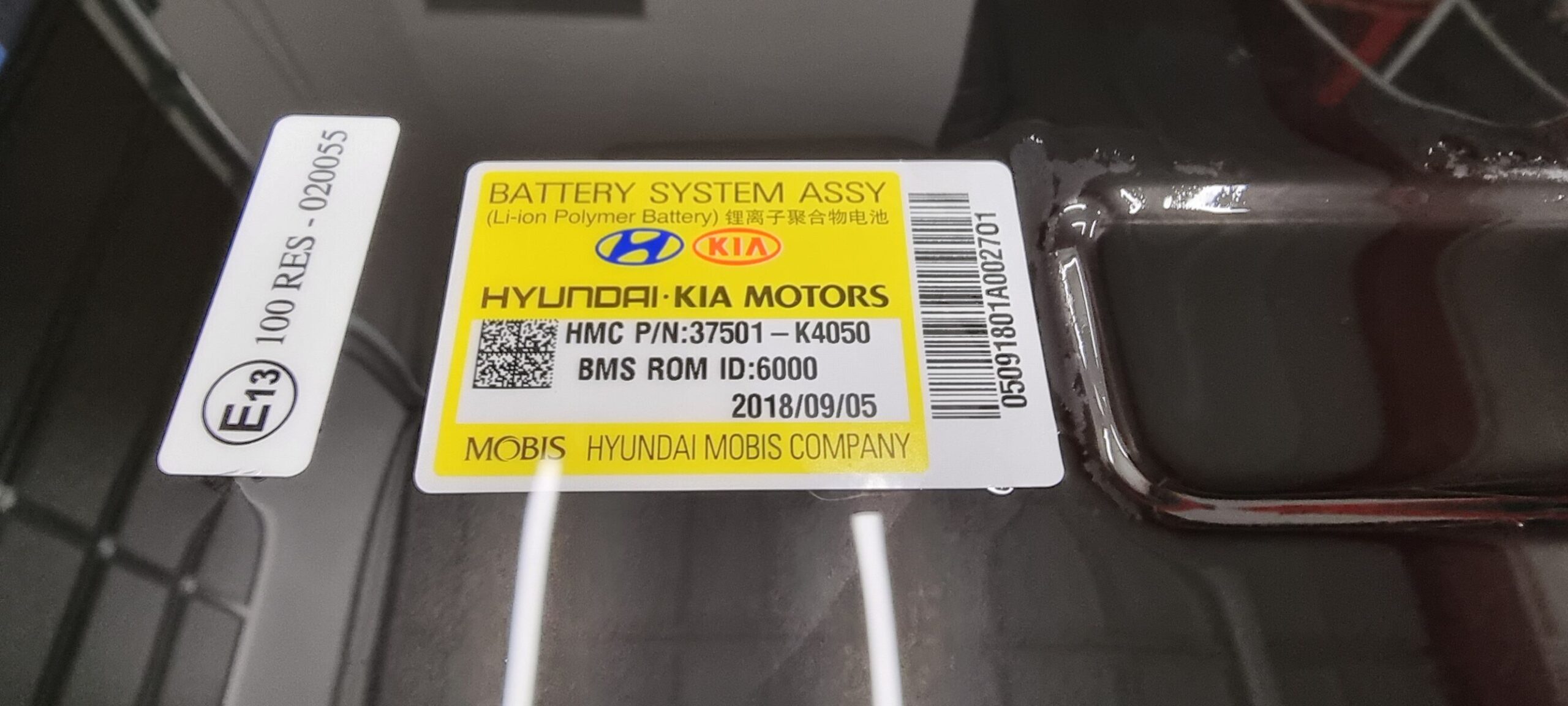
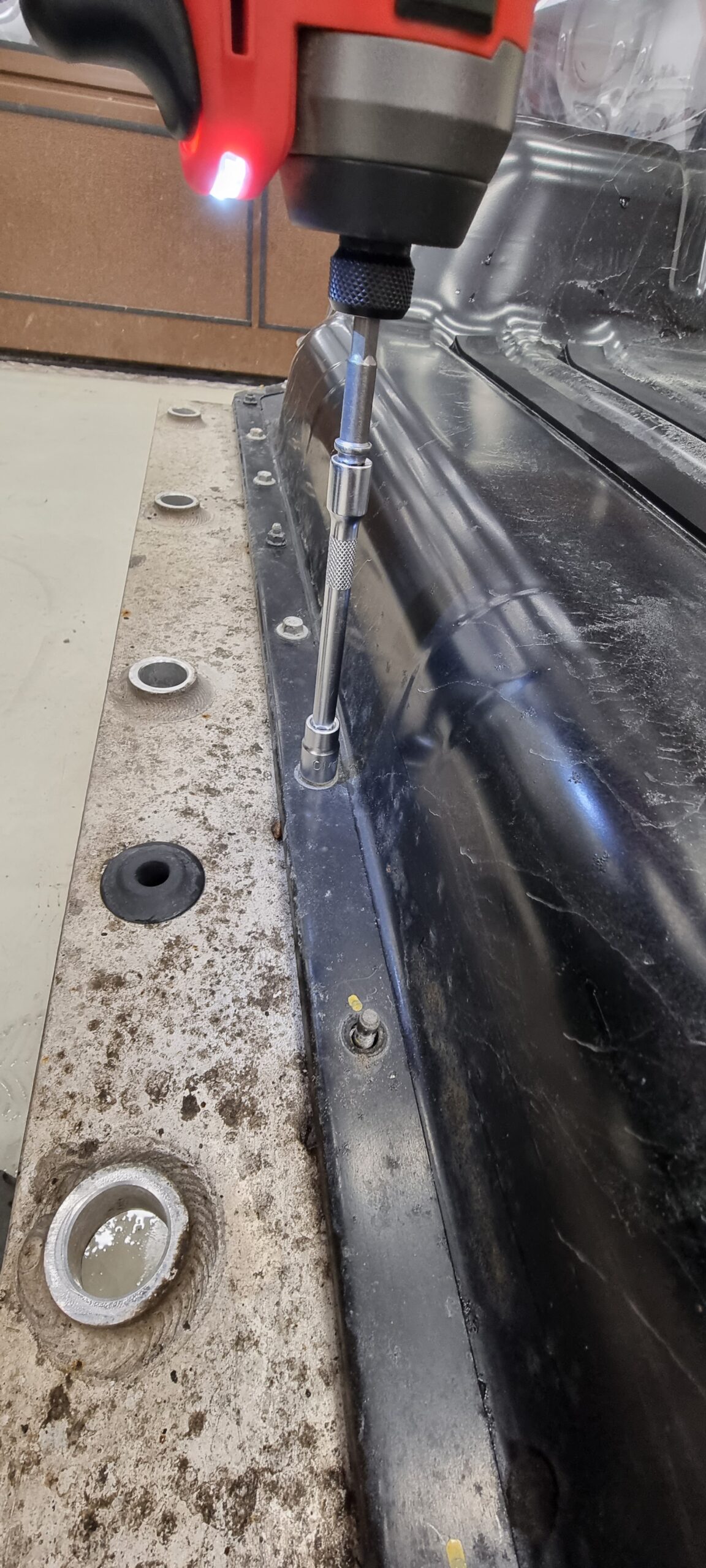
The battery cover is attached with bolts and nuts.
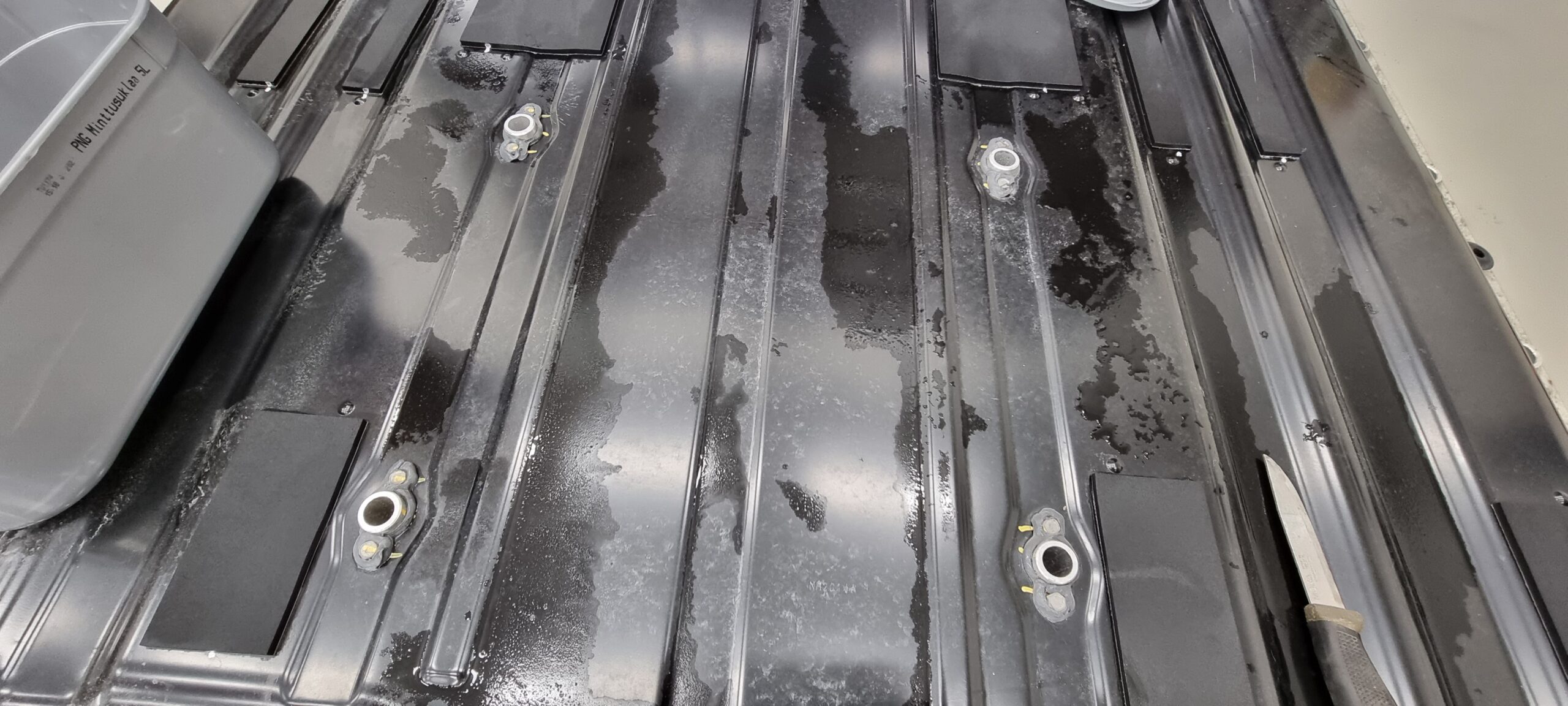
The Kona battery comes apart easily. Its sheet-metal lid is held on with nuts and bolts, with no adhesive apart from sealant around the eight bolt penetrations on top, supplementing their seals.
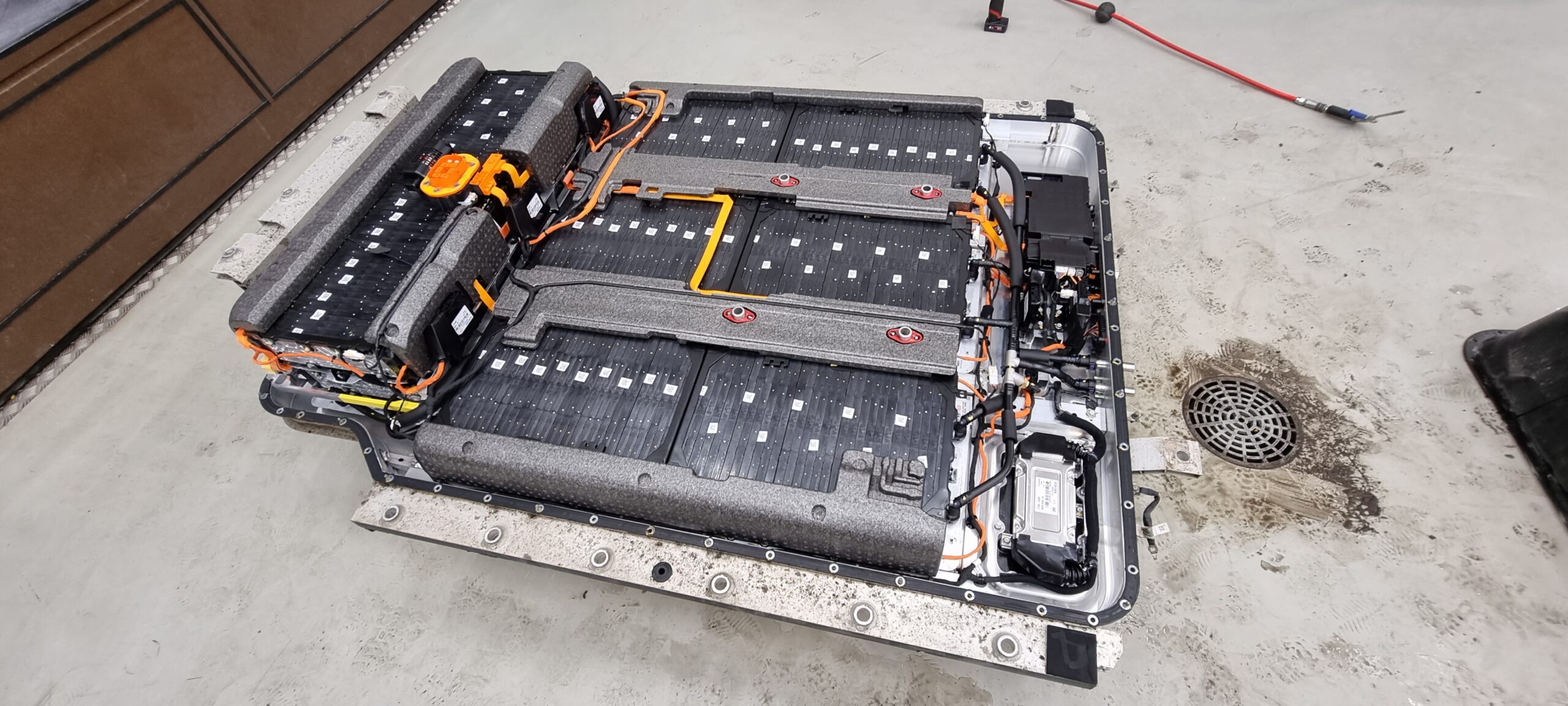
This is what it looks like with the lid off.
The sheet-metal cover lifts off easily, revealing a tightly packed set of modules made from pouch cells. The front holds the electronics, while the rear has two layers of battery modules beneath the back seat. Polystyrene pieces protect the modules from the cover.
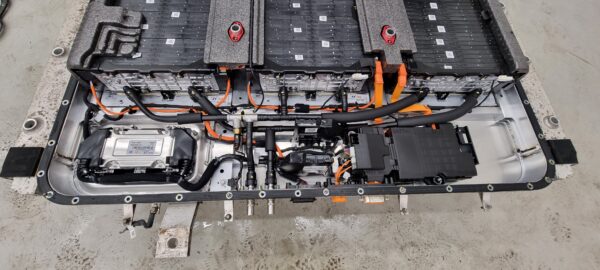
Front end electronics and cooling/heating piping
At the front are the master BMS, two slave BMS modules, contactors and other battery electronics, plus the glycol coolant pipes used to heat and cool the pack. The pipes split into three circuits; the outer two also run through the stacked modules at the rear. You can see the seal around the edge of the housing too. It's a separate, replaceable part. Much nicer to service than a Tesla Model S battery with its bonded lid.
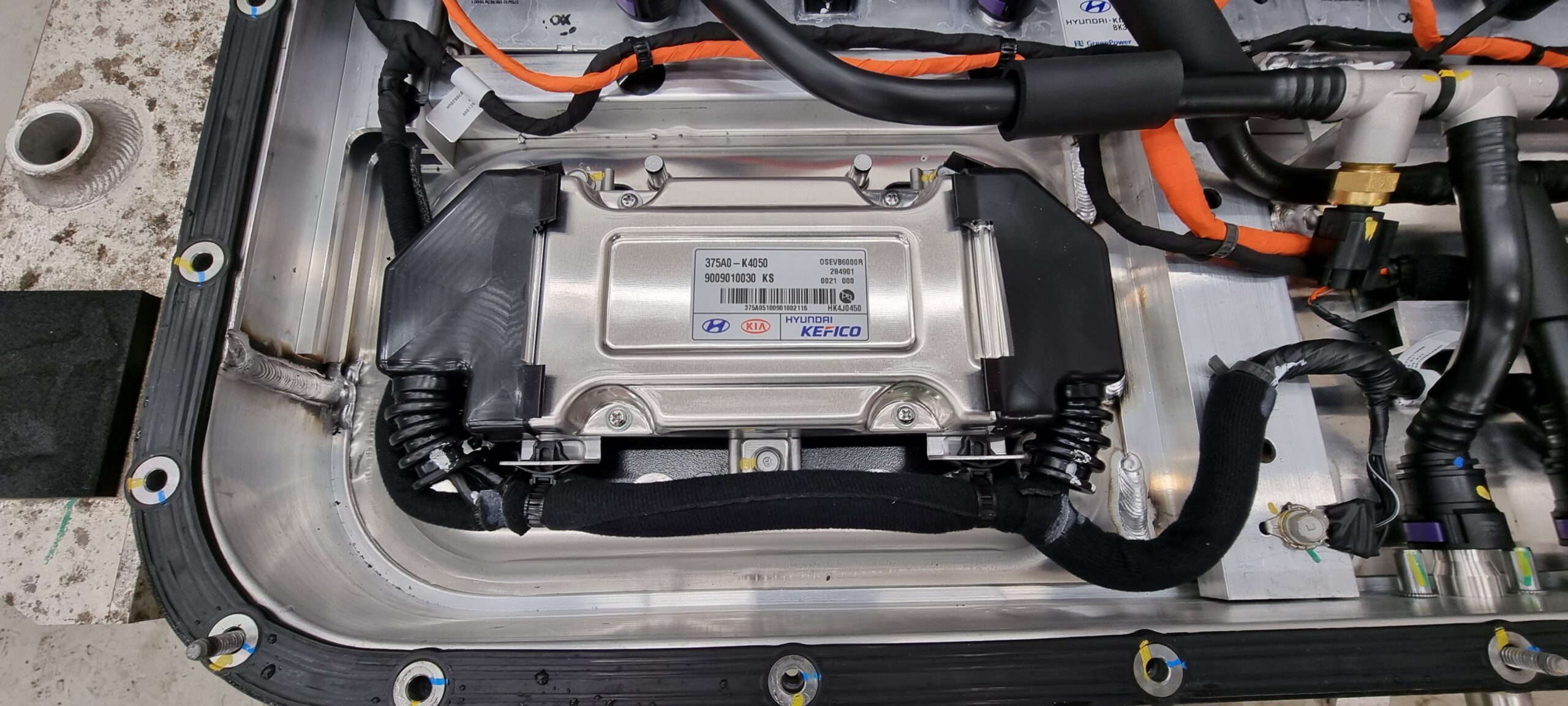
BMS master
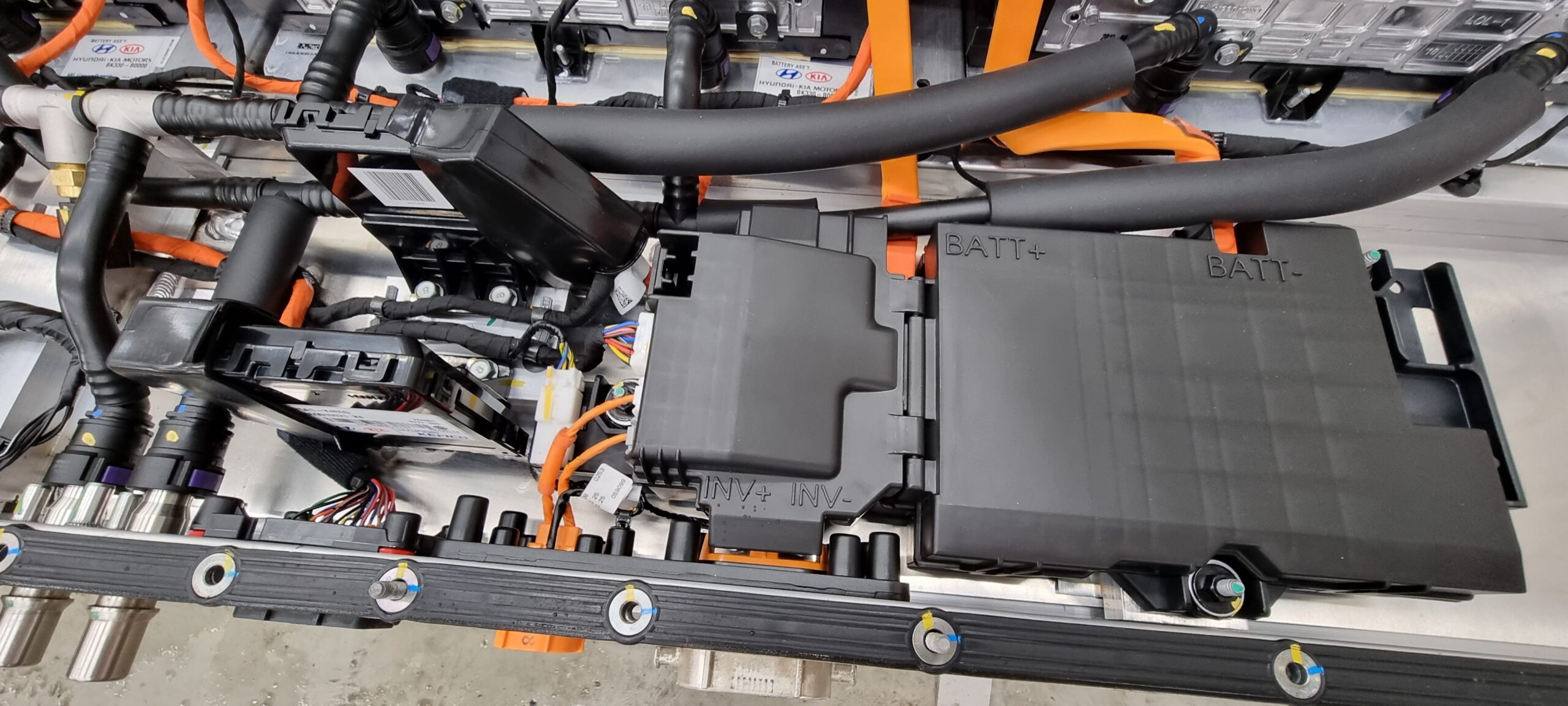
Two BMS slaves and contactors under the cover
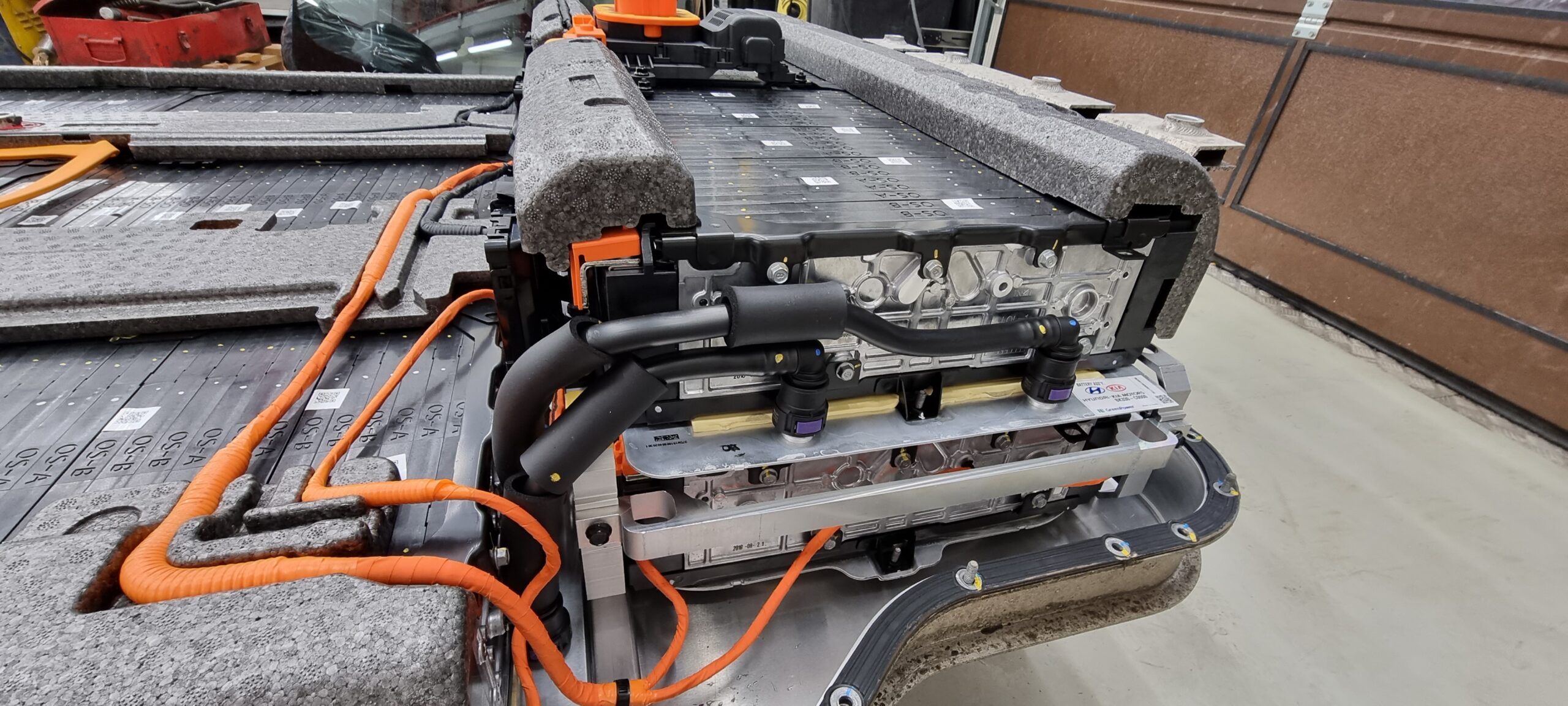
From the outer modules, the coolant circuit continues through the stacked modules at the rear.
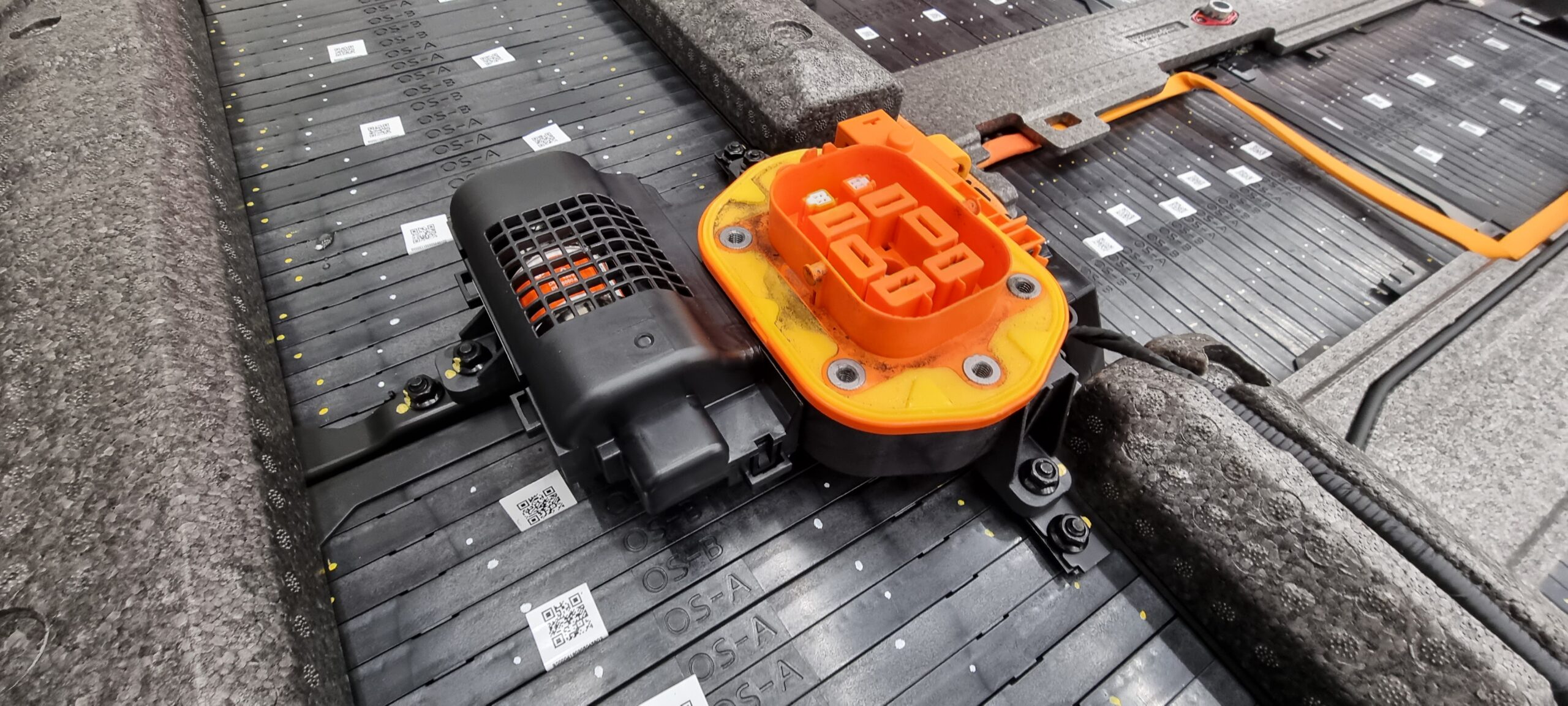
There is a fuse and a service disconnect connector on the back of the battery.
There are ten modules altogether, grouped in pairs. Each pair shares cooling and a slave BMS, which communicates with the master BMS.
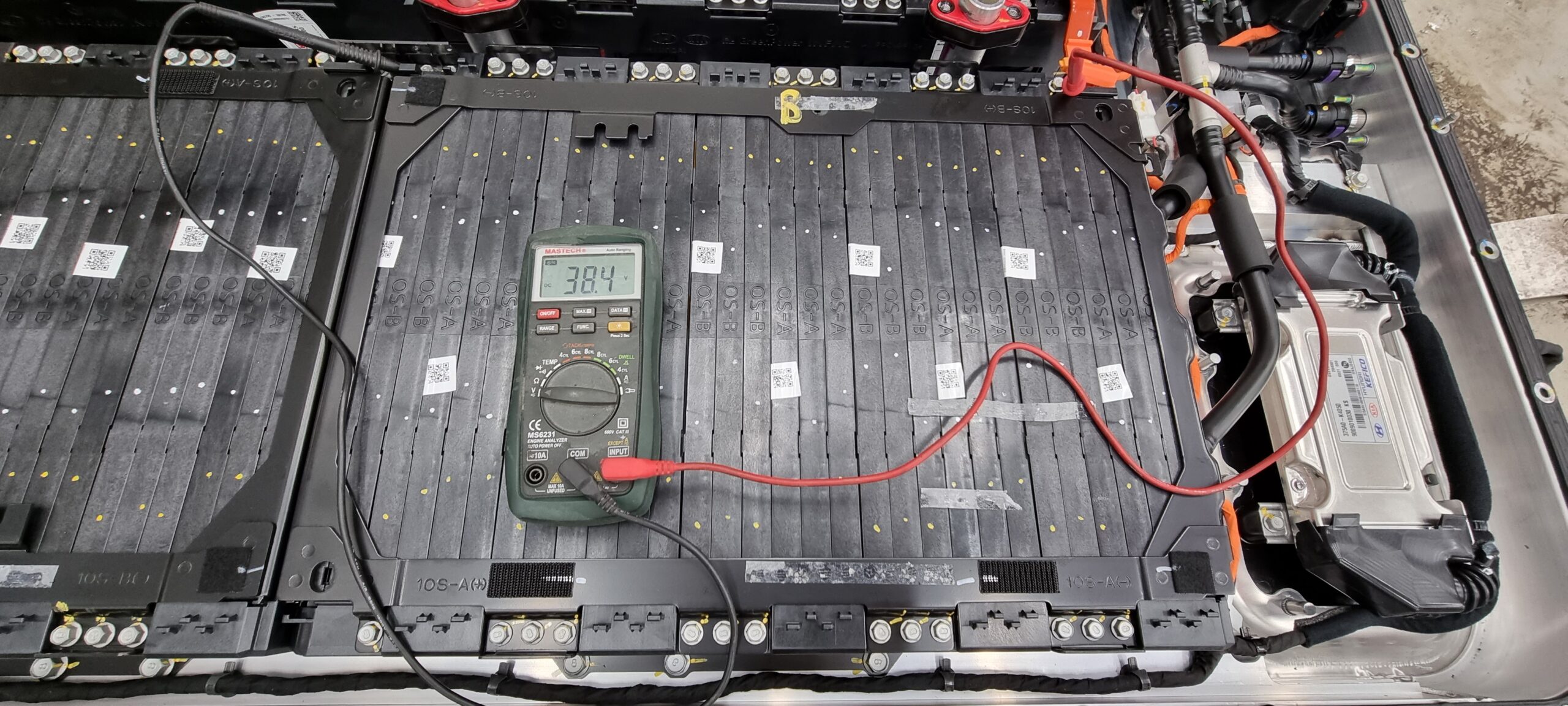
I measured the module voltage at 38.4 V, indicating a charge level well above halfway. The car’s display showed about 70%. This module has a 3p10s configuration: 30 cells, arranged as ten series-connected groups of three parallel cells.
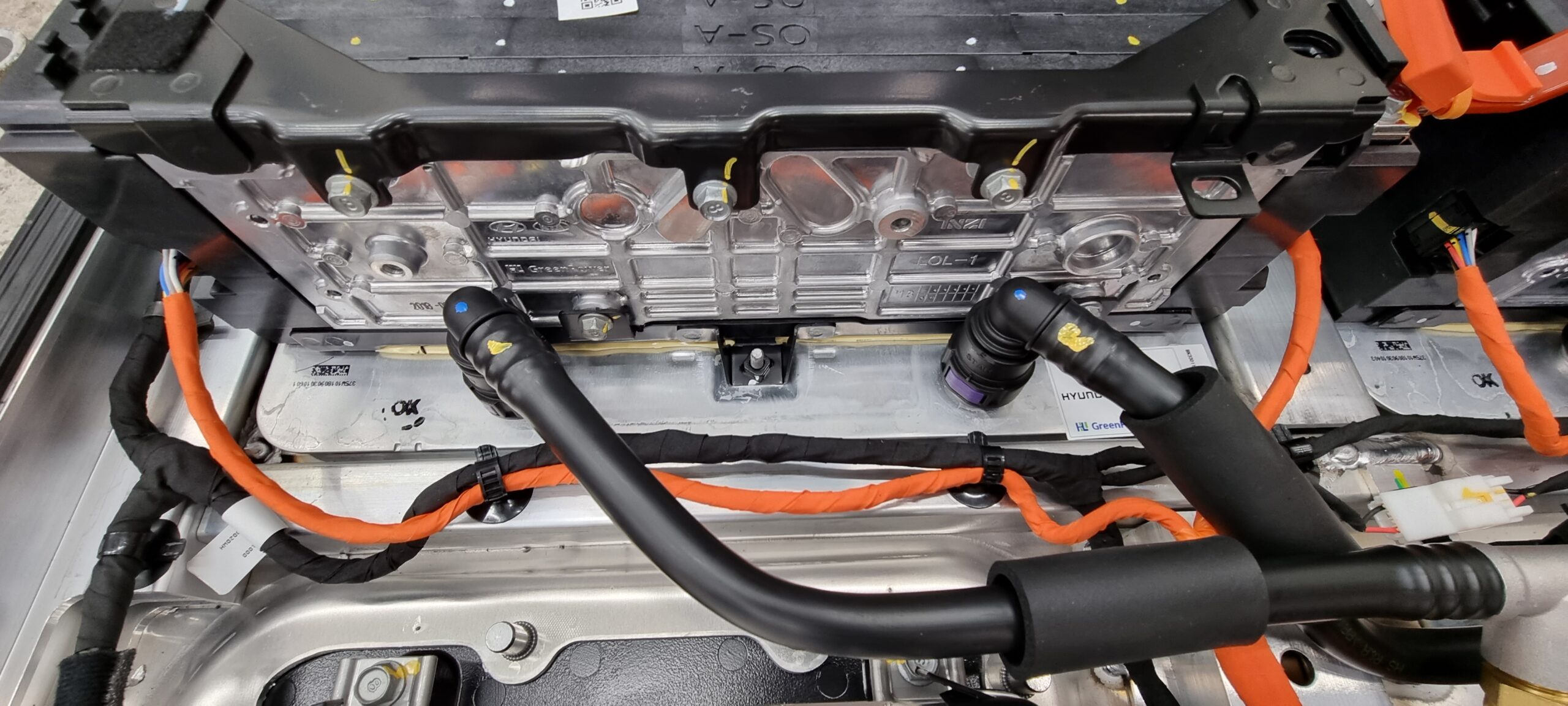
The cooling pipes are attached to the cooling plates under the battery modules with quick connectors.
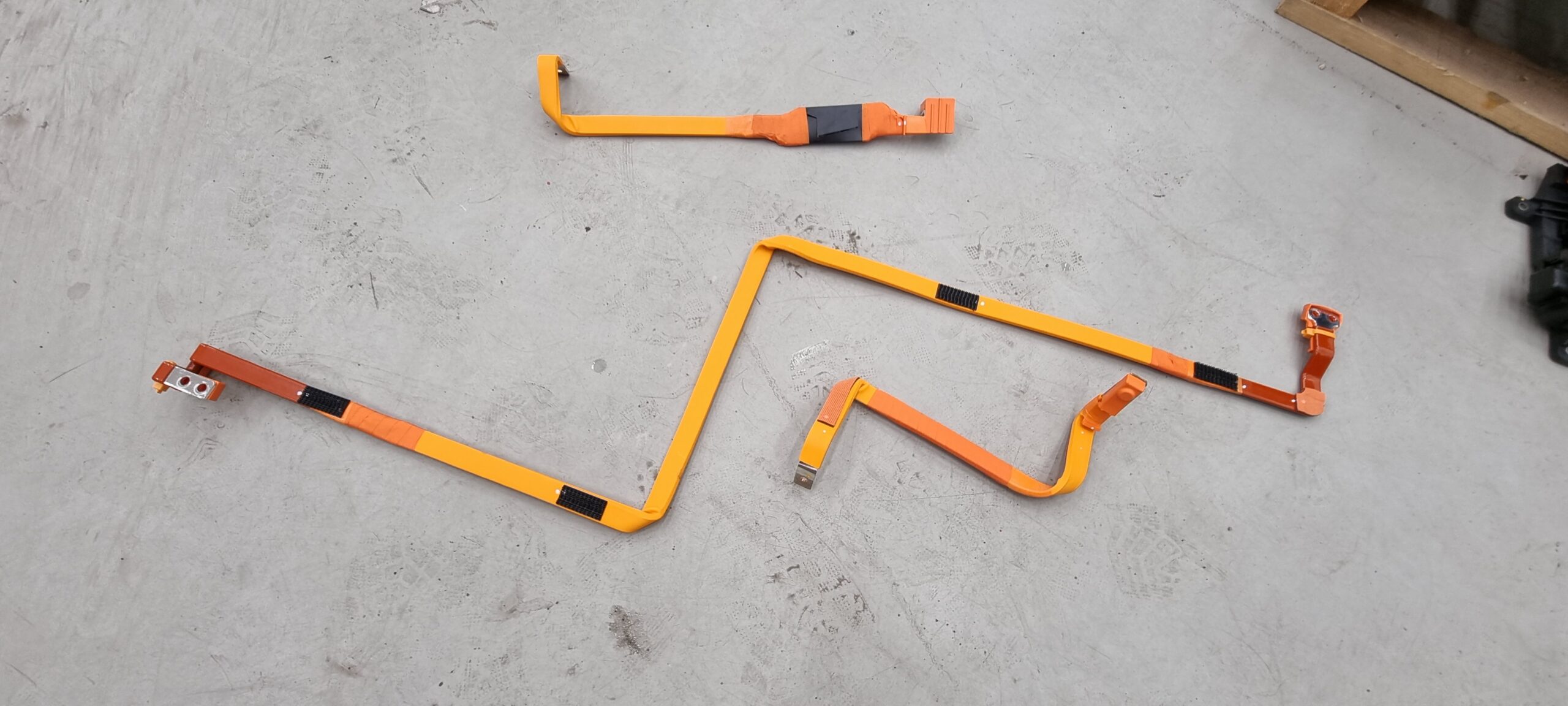
Current passes between the modules through flat conductors.
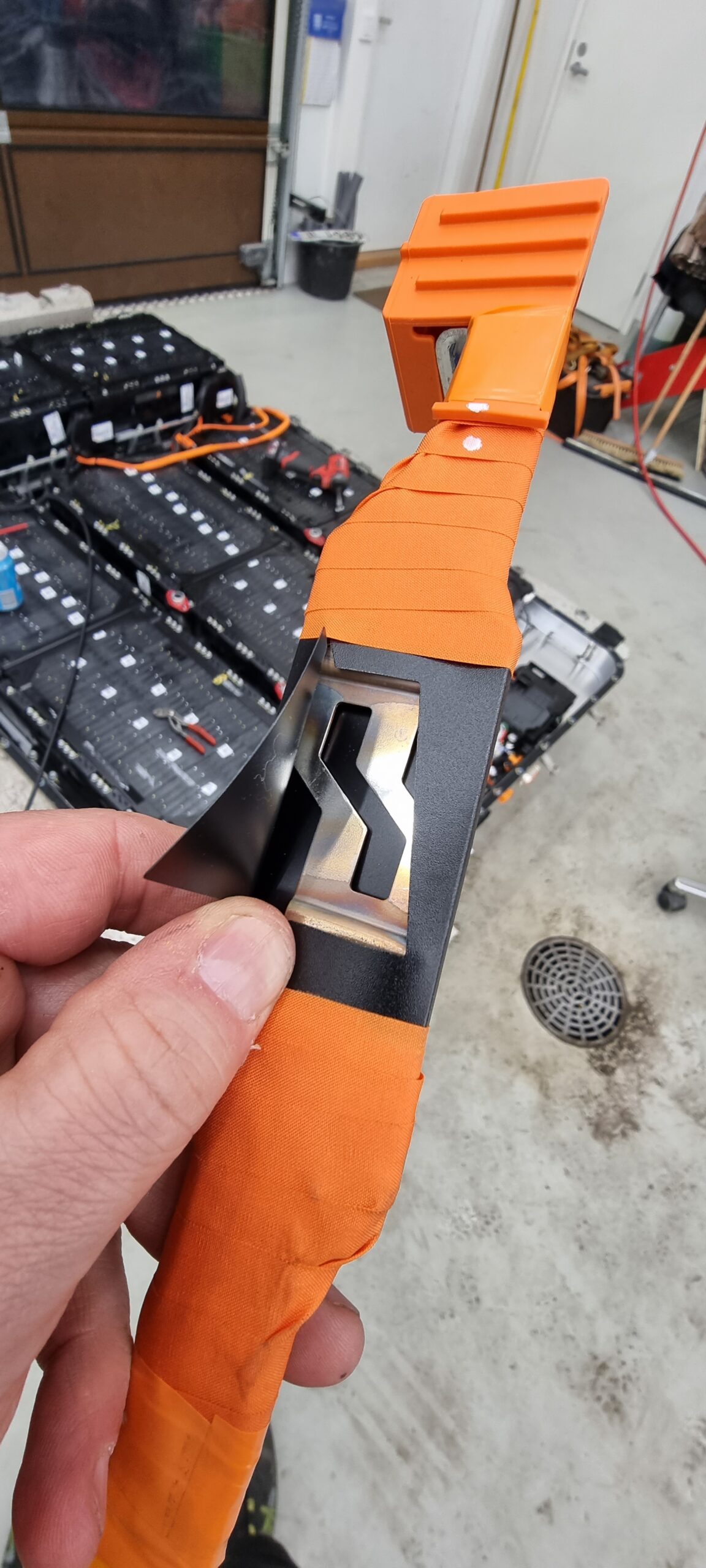
One of the conductors has this “fuse”.
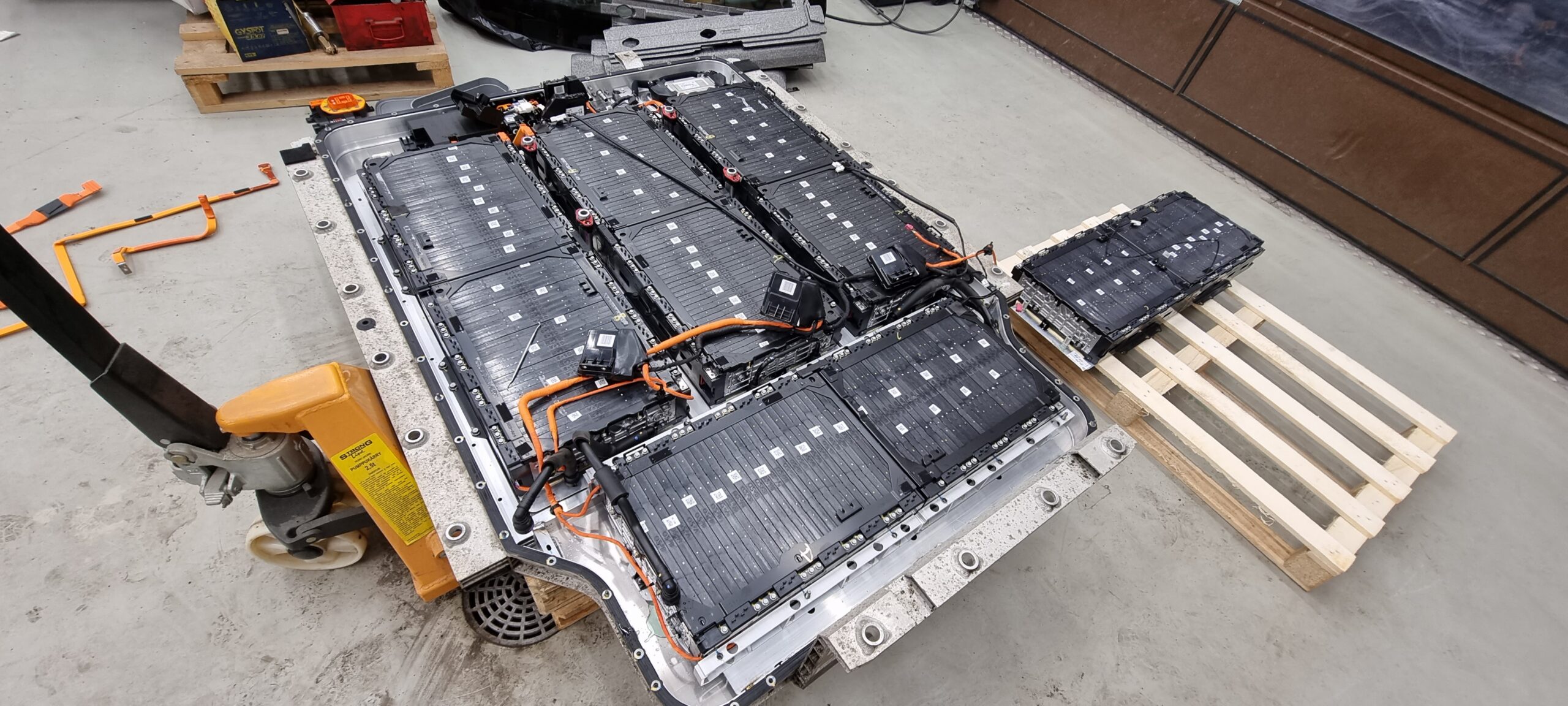
The photo above shows the first module moved onto a pallet. At this point I had not noticed that the transverse modules at the rear are slightly smaller than the longitudinal ones. Each rear pair contains modules of two different sizes, 3p10s and 3p9s. In total, the battery has eight 3p10s modules and two 3p9s modules.
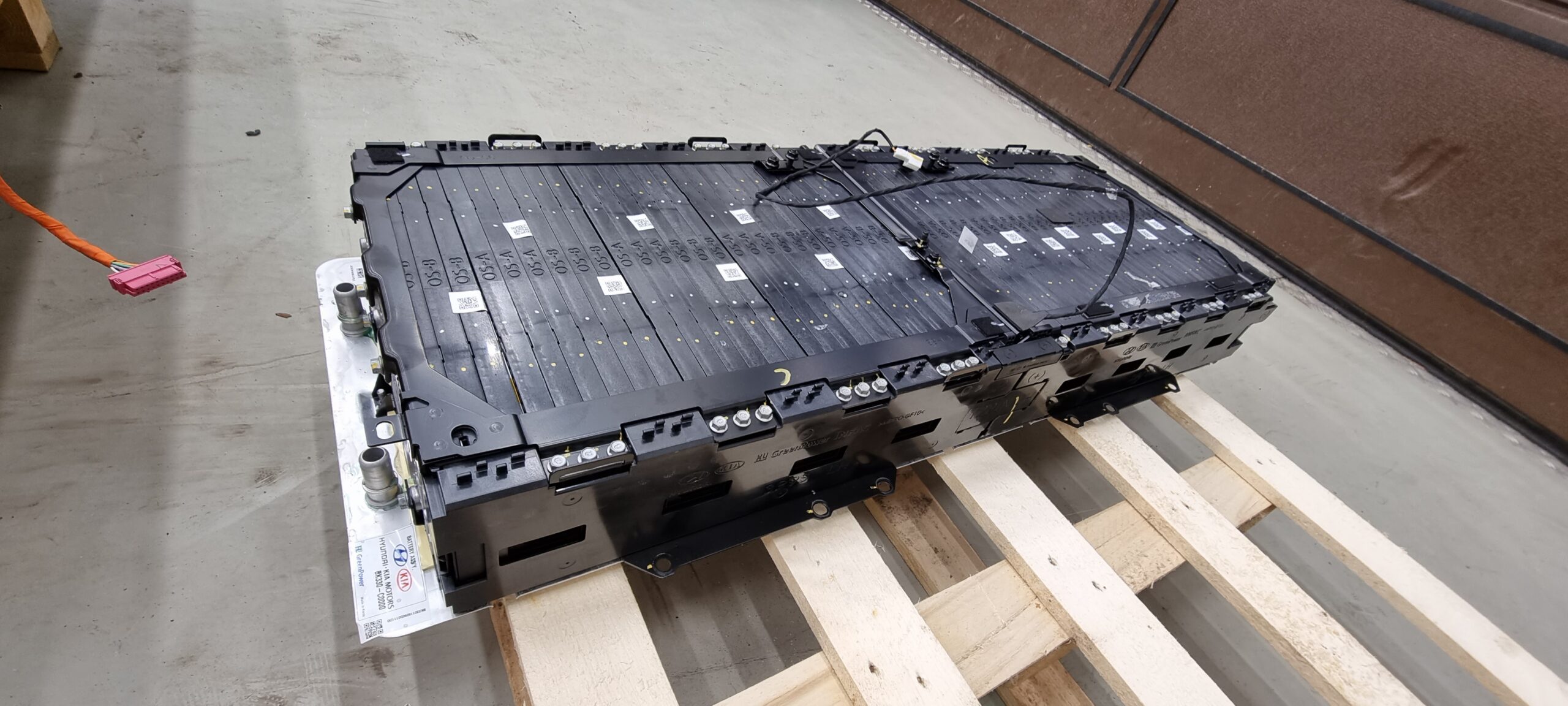
One such module pair weighs approx. 70 kilos.
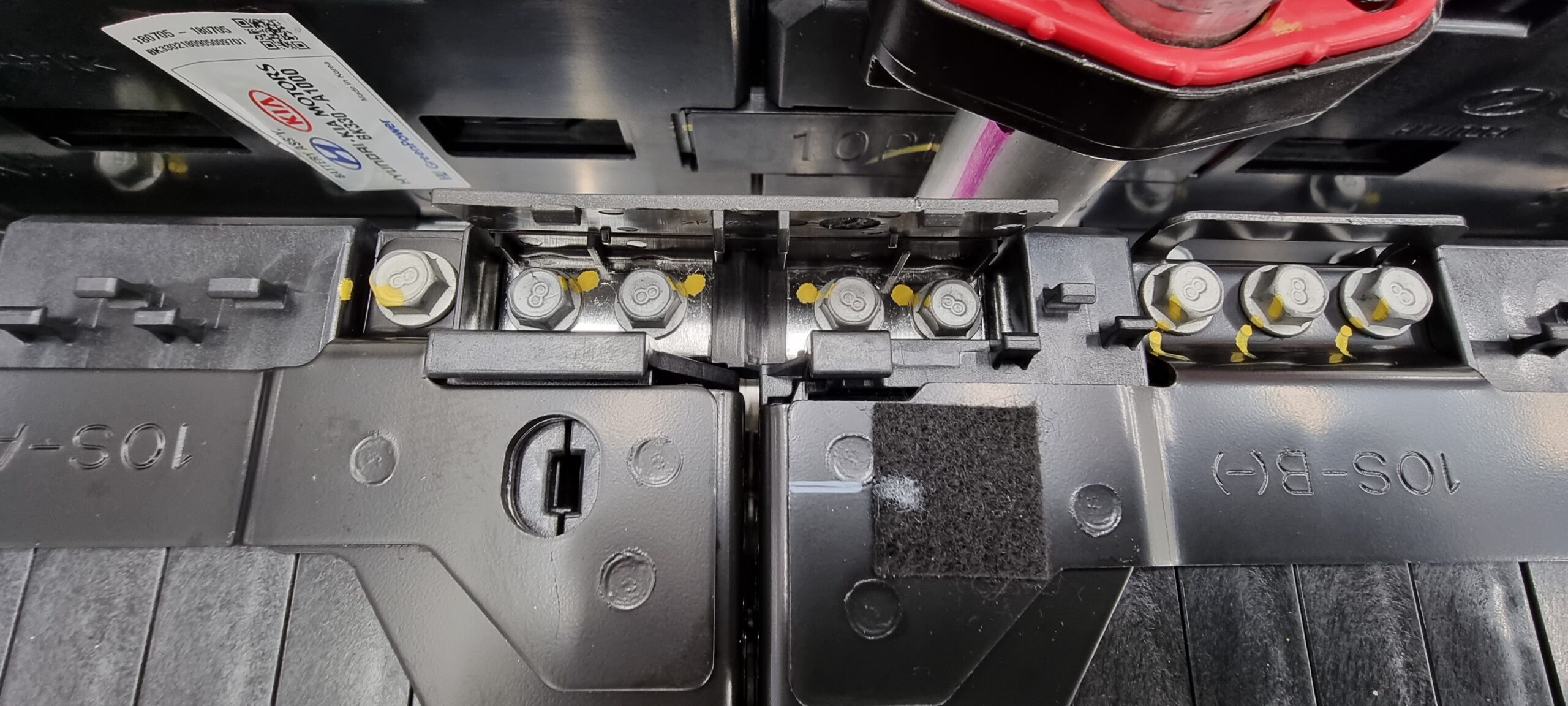
Busbars connect the two modules in each pair.
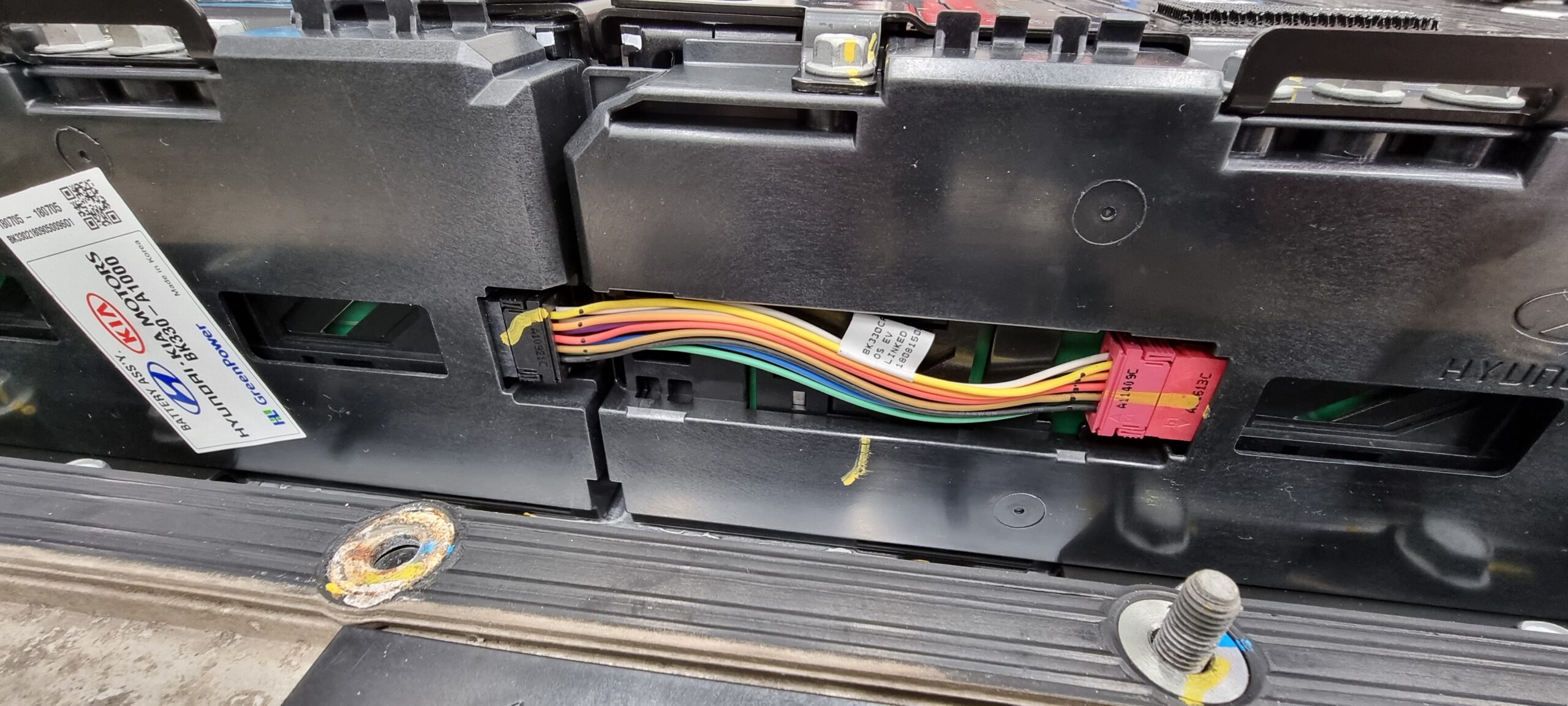
The cell-voltage signals needed by the BMS also pass between the module pairs. A “bus” runs along both sides of the modules — in practice, wires from the cell terminals to the slave BMS units.
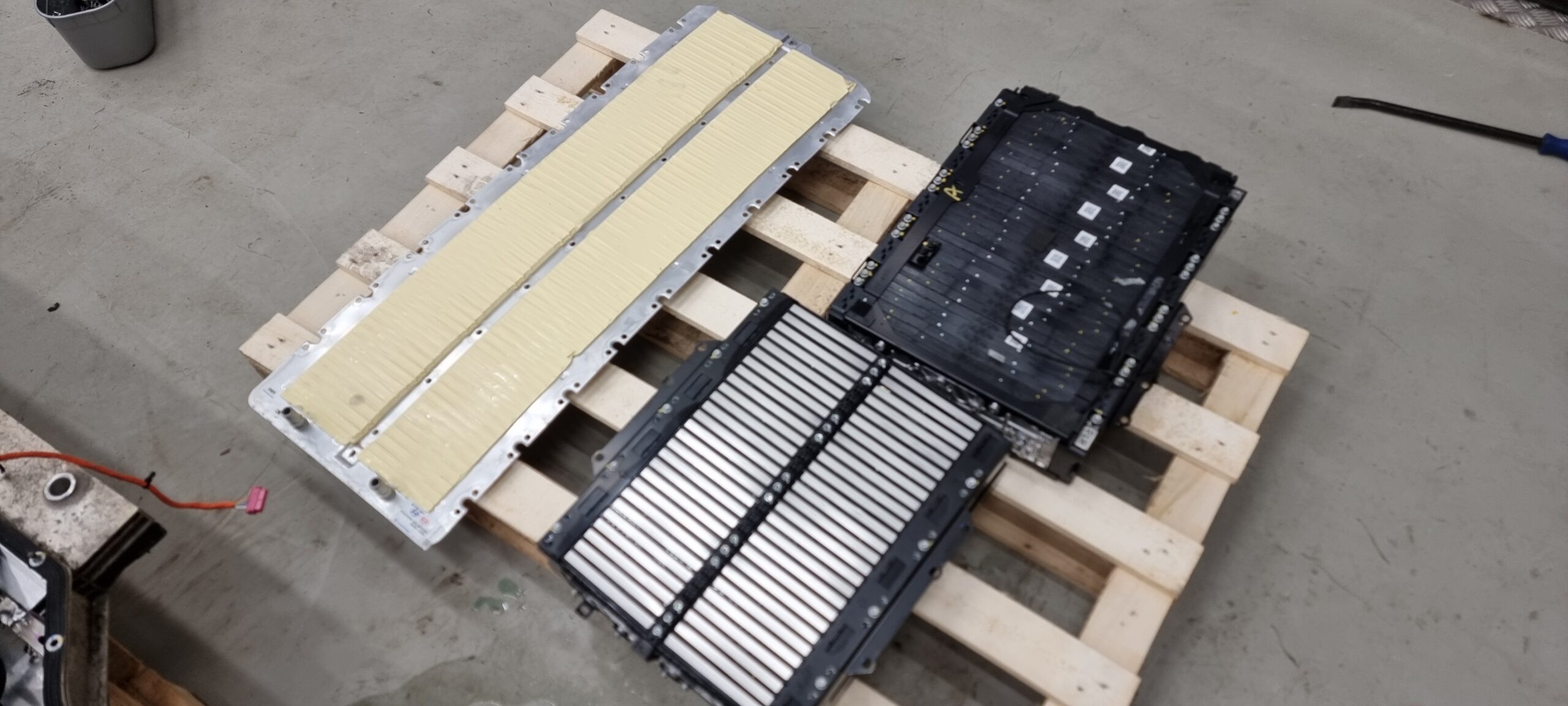
The modules are detached from the cooling base
A few bolts and thermally conductive compound attach the modules to the cooling plate.
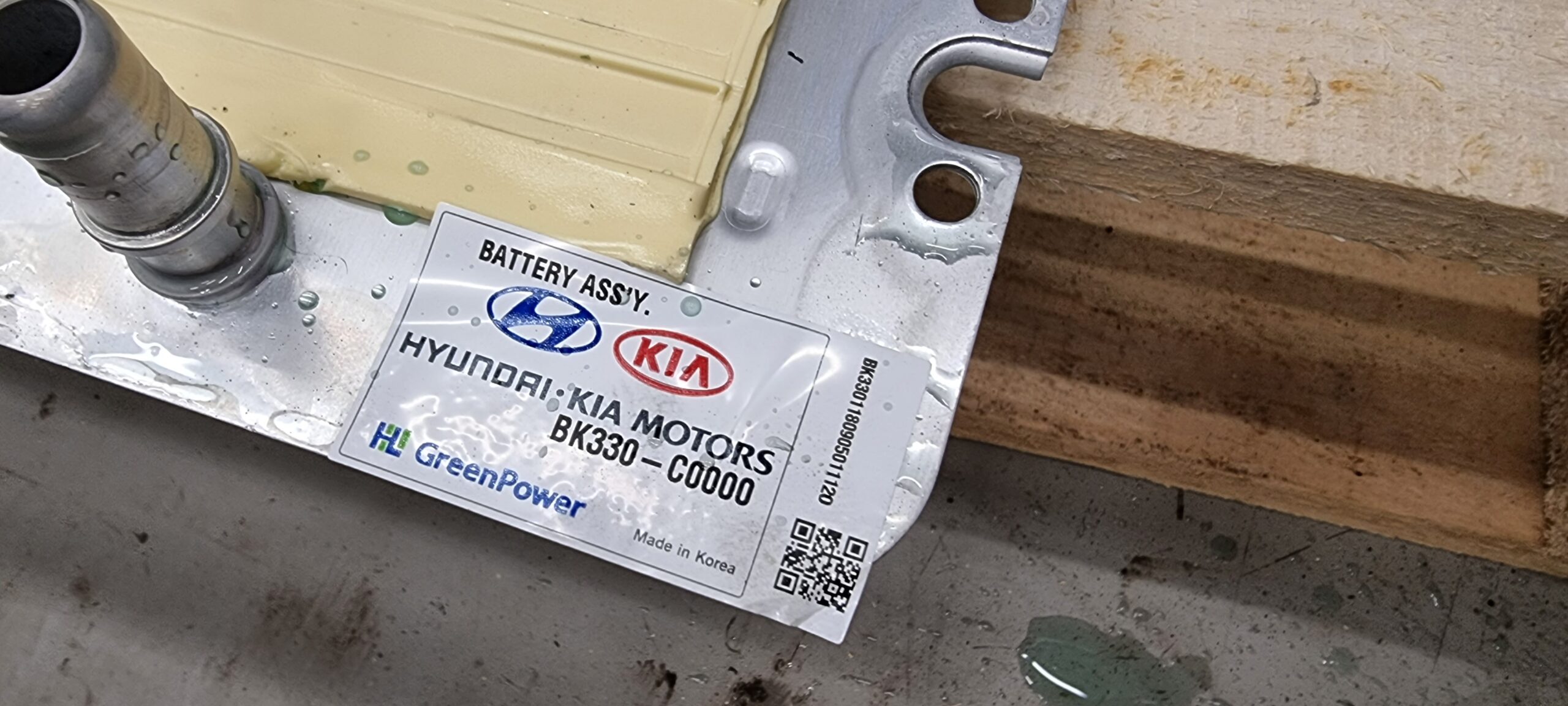
These can probably be bought separately too.
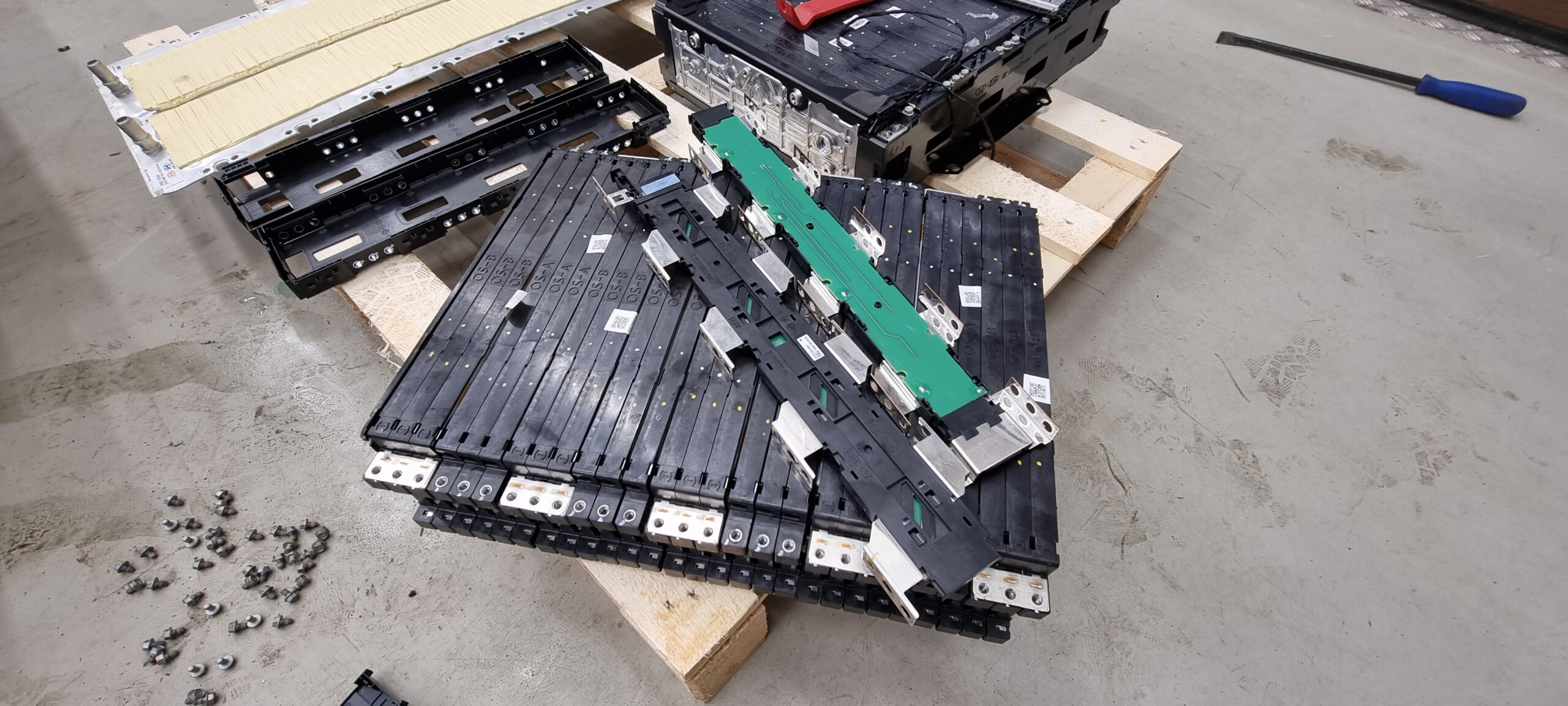
Out of curiosity, I took one module right apart. A metal frame around the top and bottom holds it together, with aluminium reinforcing plates at the ends. The assembly is compressed together, then the interconnection boards are fitted to the terminals. These connect the cells and carry their voltage signals to the BMS. Everything uses M5 bolts, which makes reusing the cells fairly straightforward.
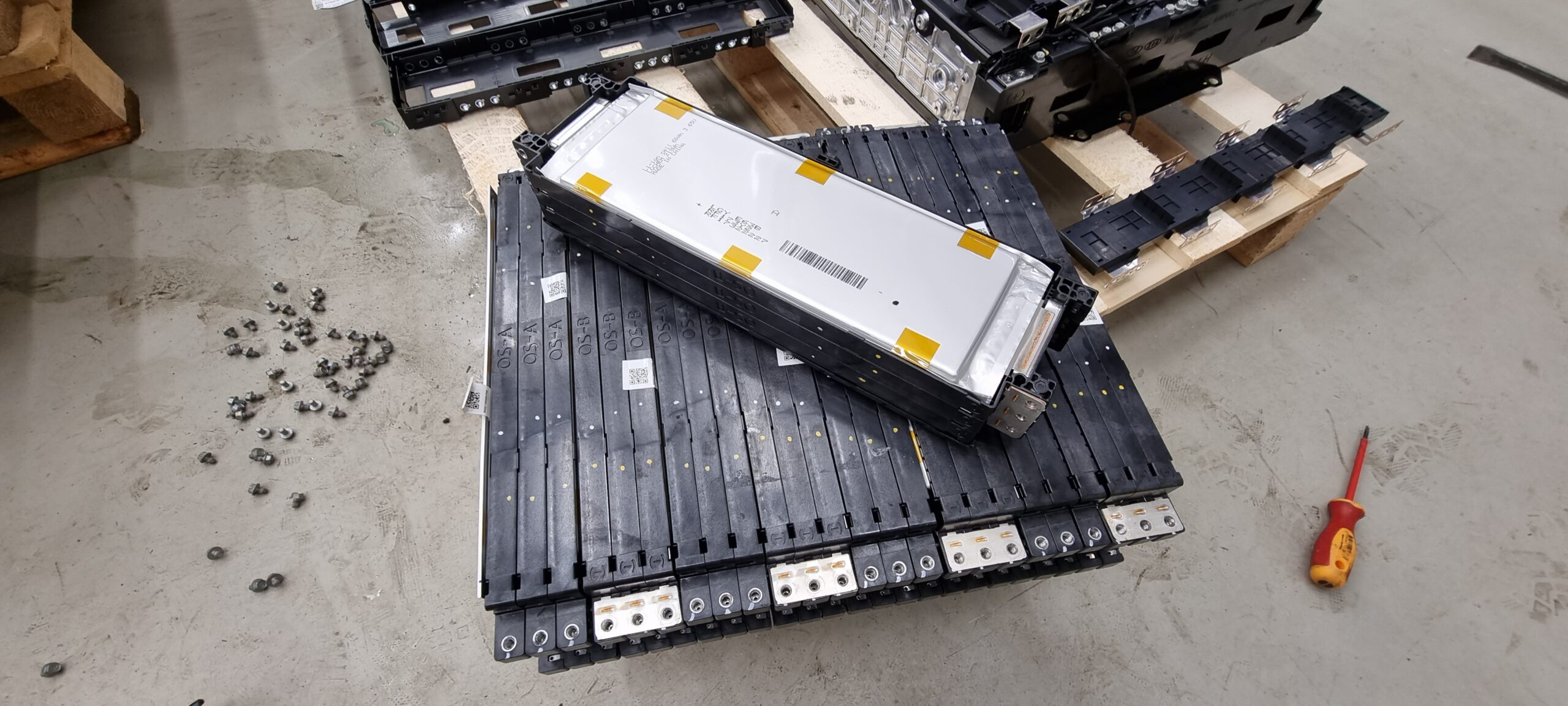
This module consists of nine "mini-modules", each with three cells connected in parallel.
The three cells connected in parallel are welded to each other, which means that it no longer makes sense to disassemble them separately.
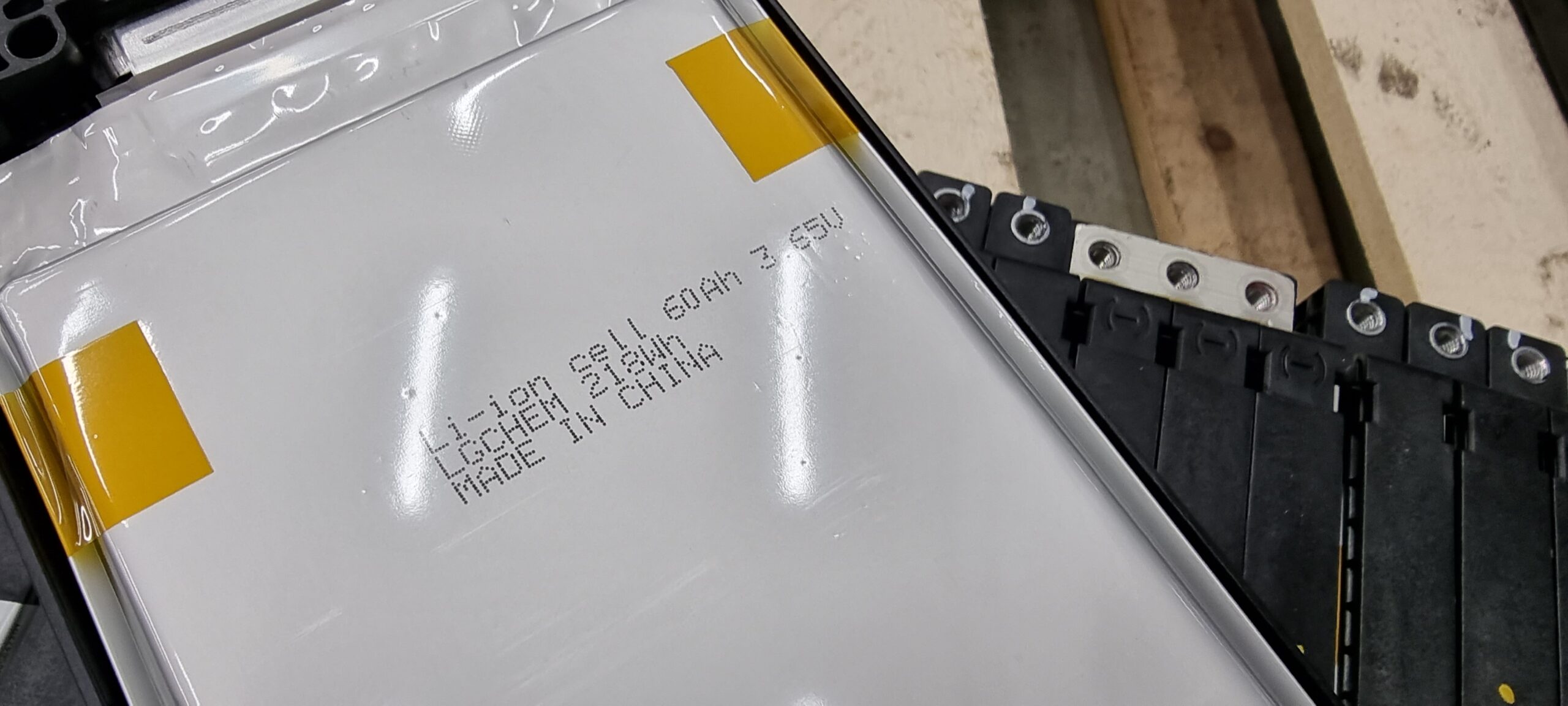
Each cell 218Wh.
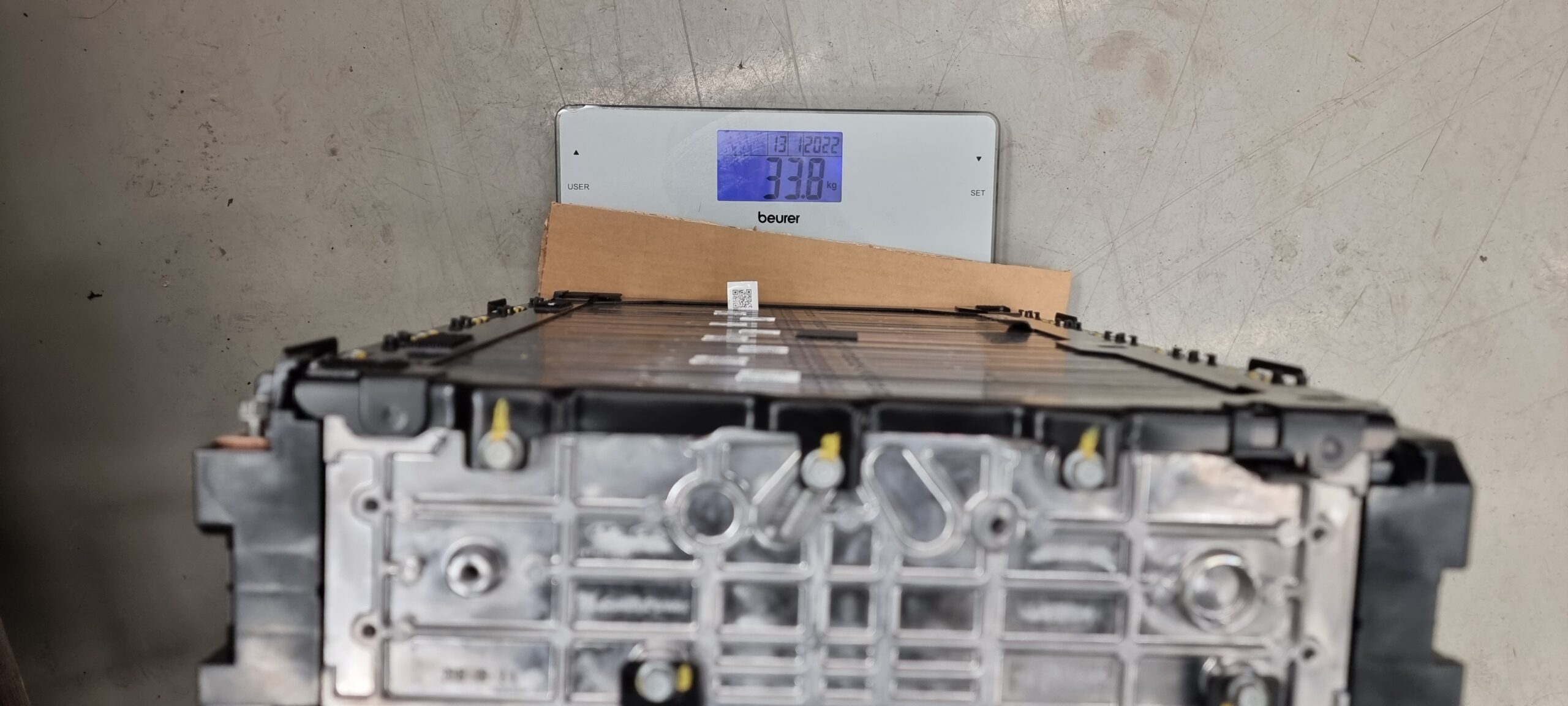
The cells are 218 Wh units made by LG. There are 8×3×10 + 2×3×9 = 294 of them, giving a total of 64,092 Wh. The two module sizes hold 6.54 kWh and 5.89 kWh. On the bathroom scales, one 6.5 kWh module weighs a shade under 34 kg.
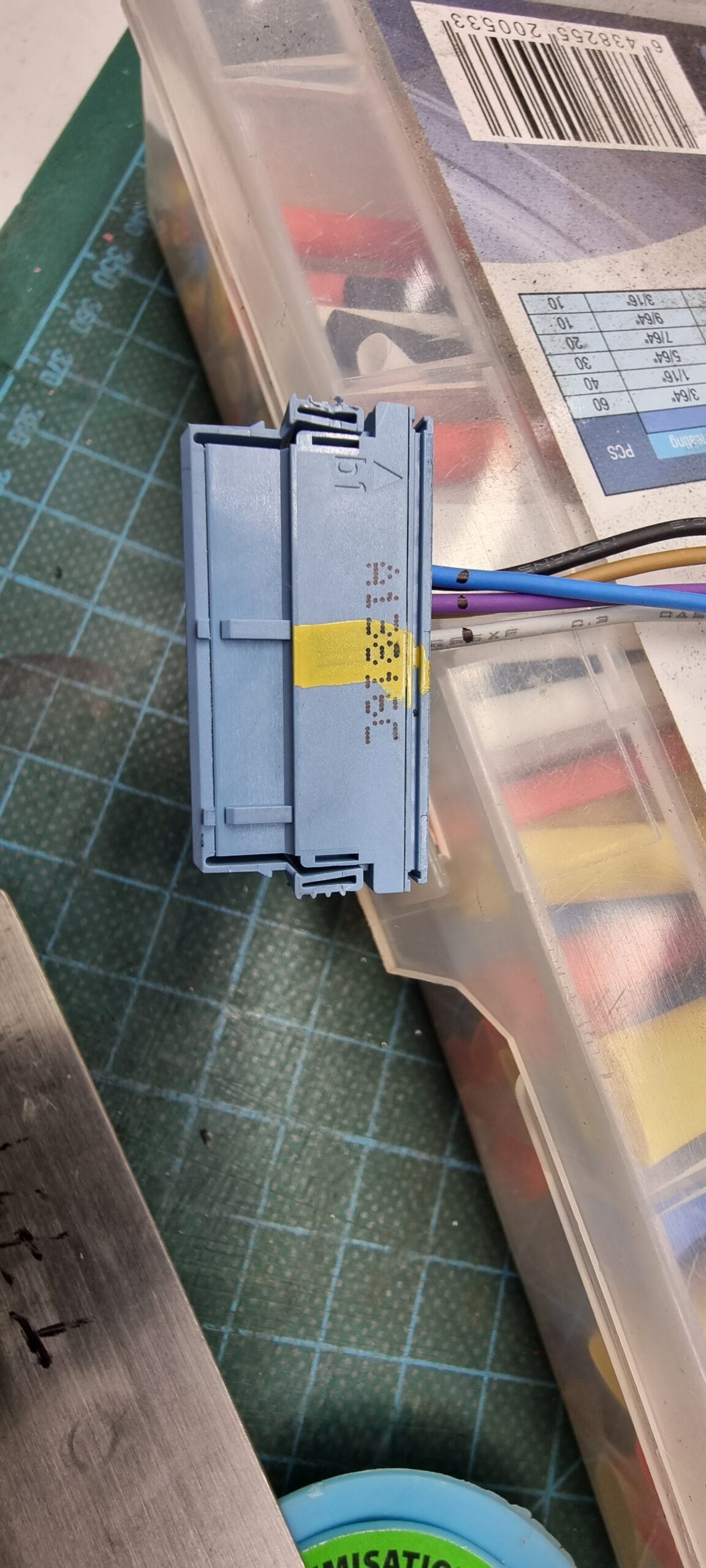
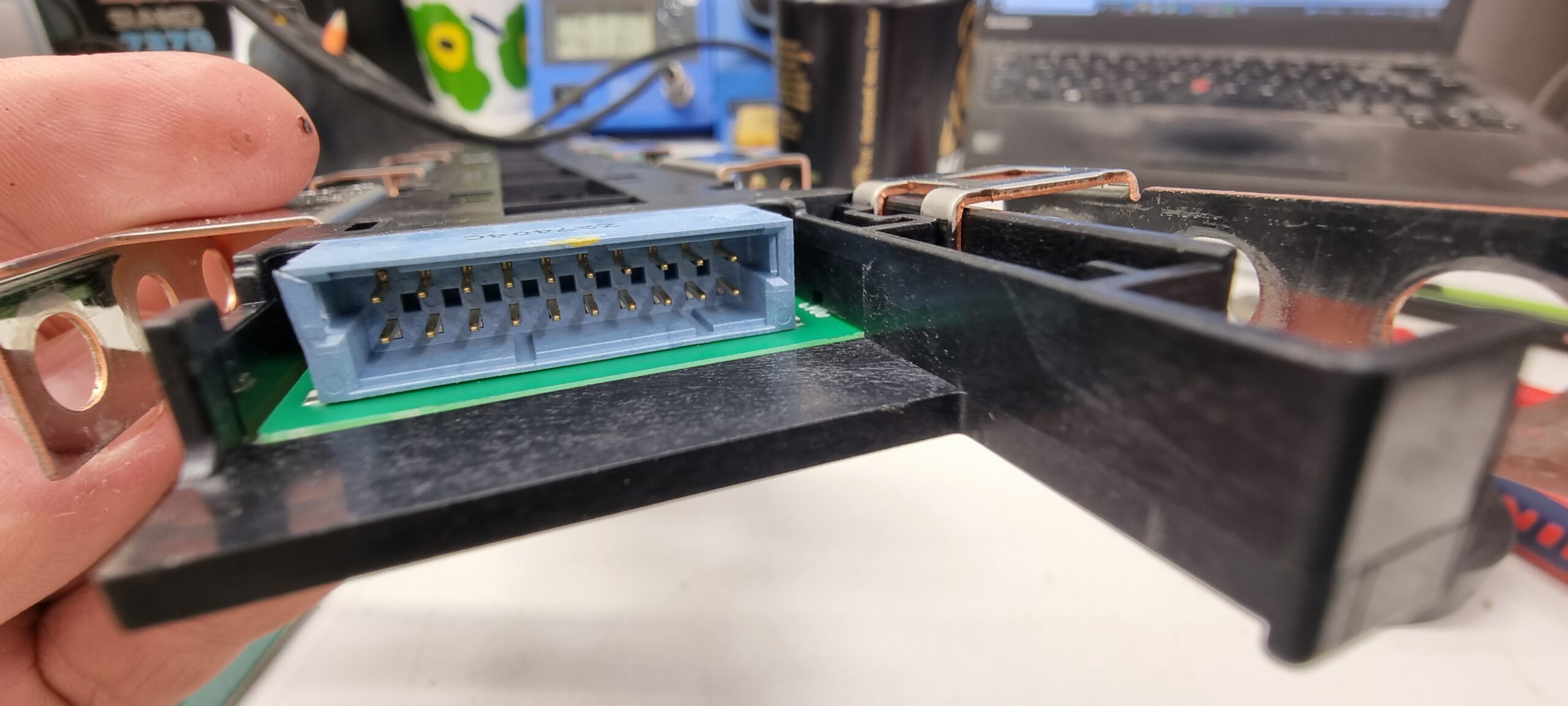
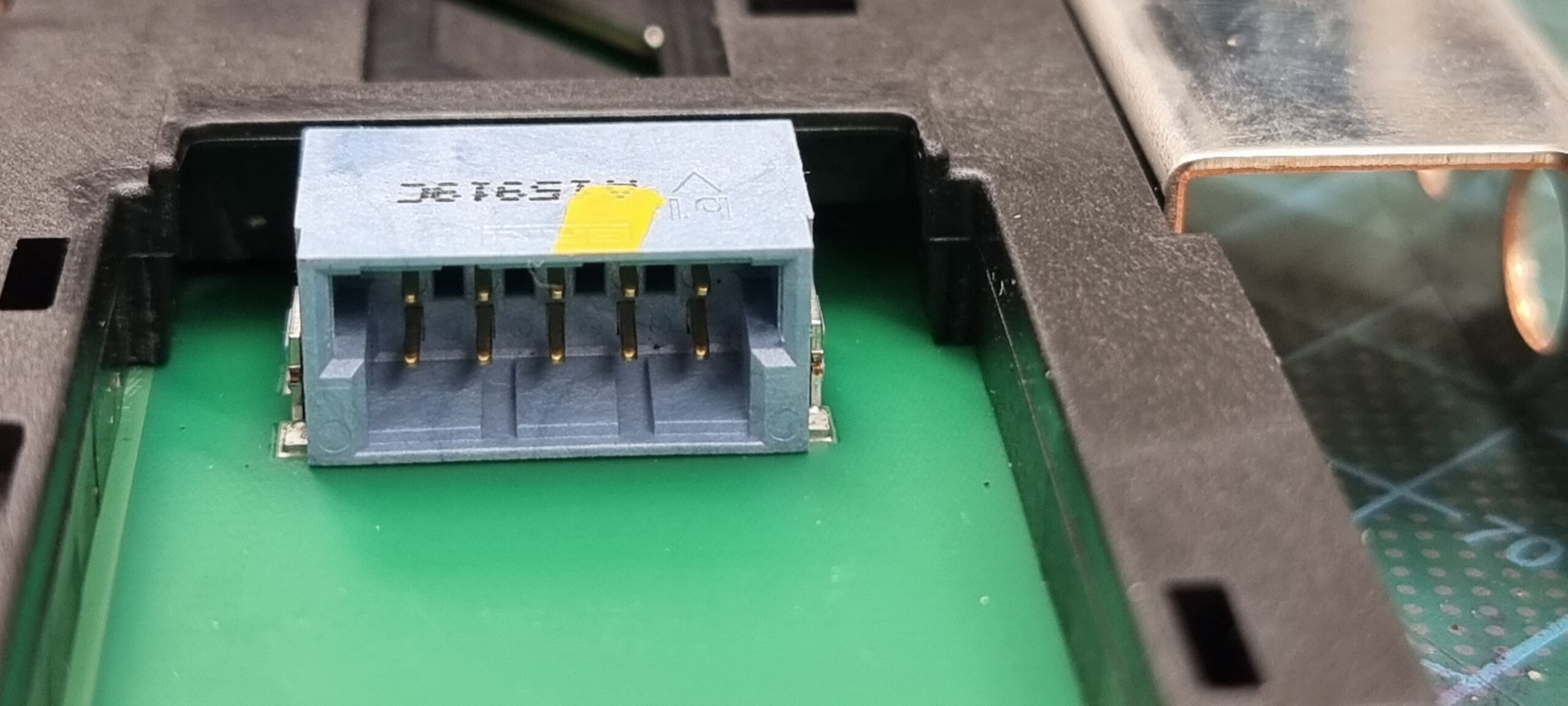
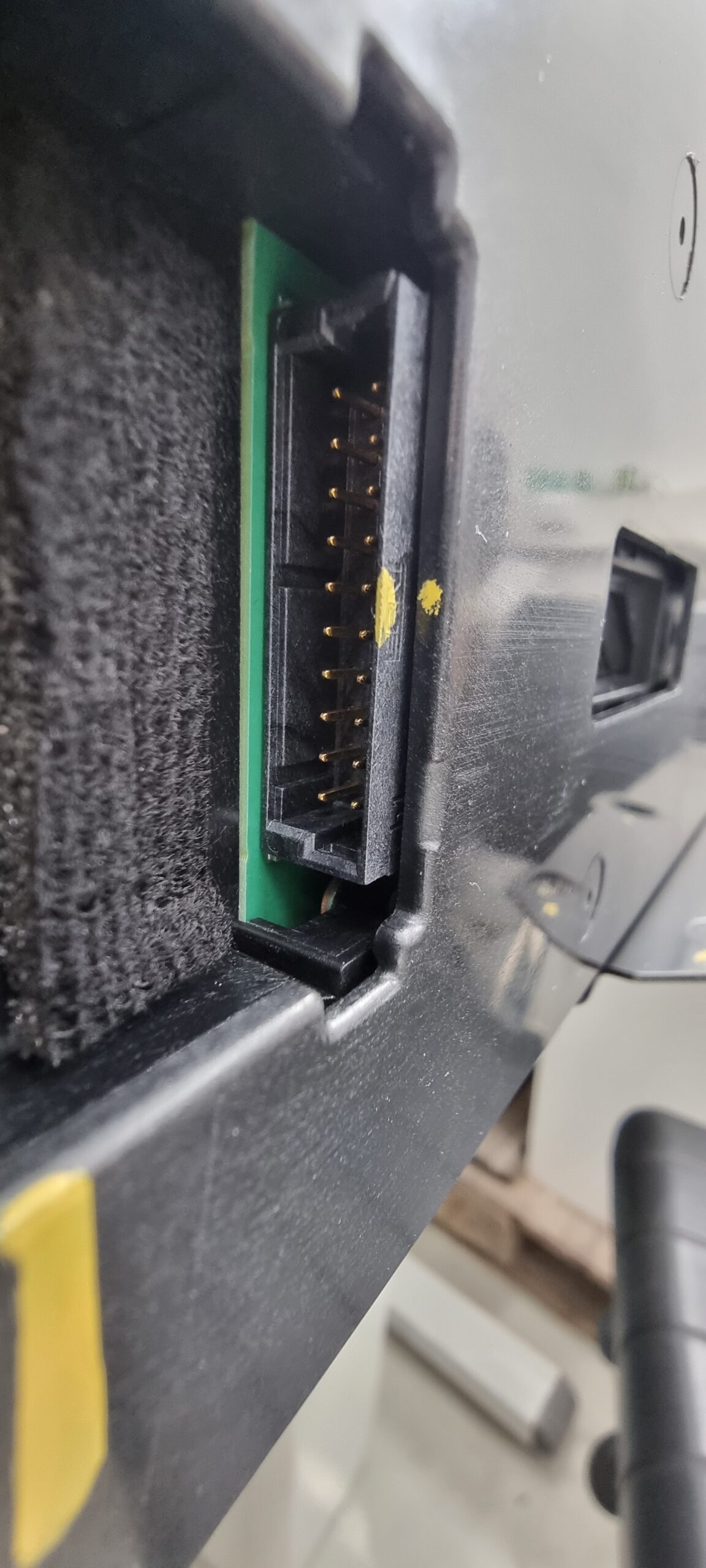
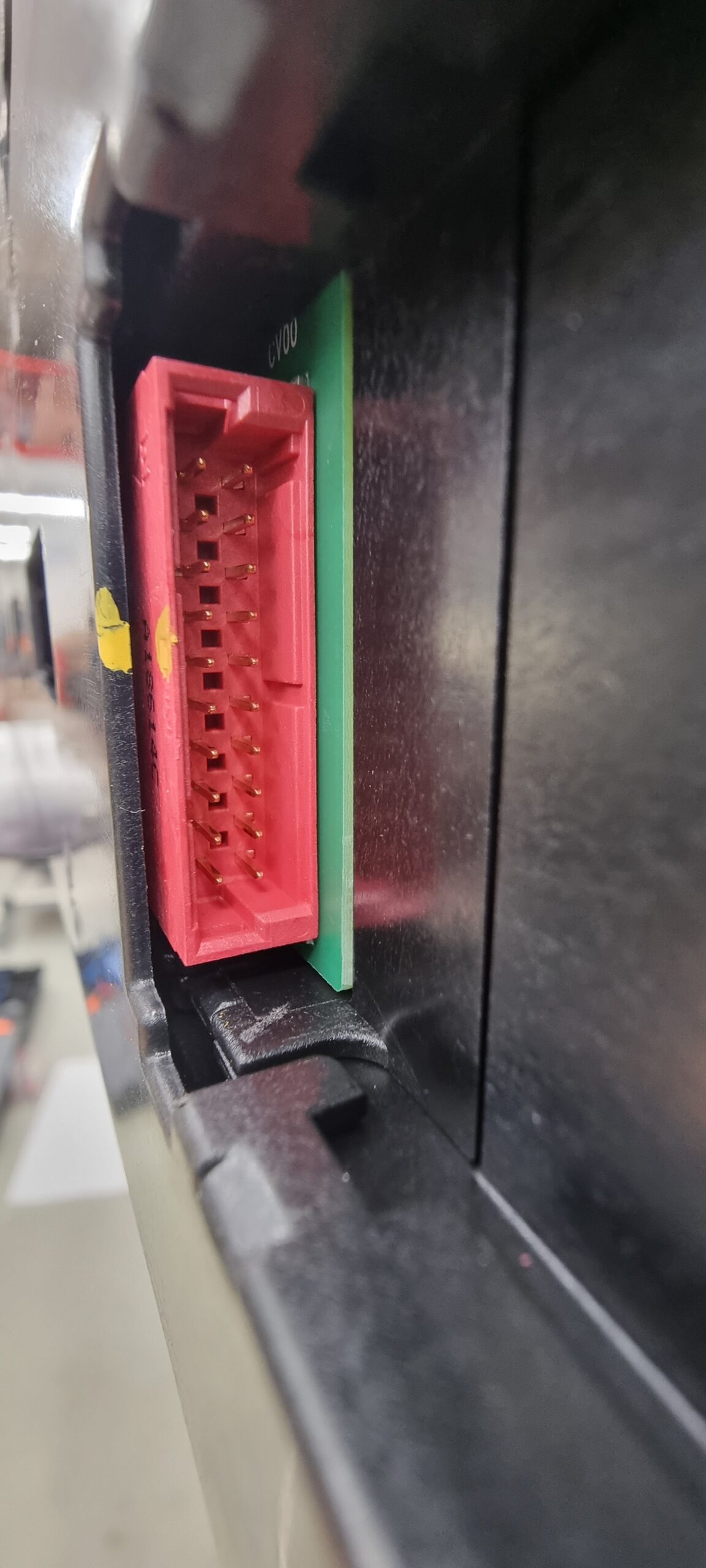
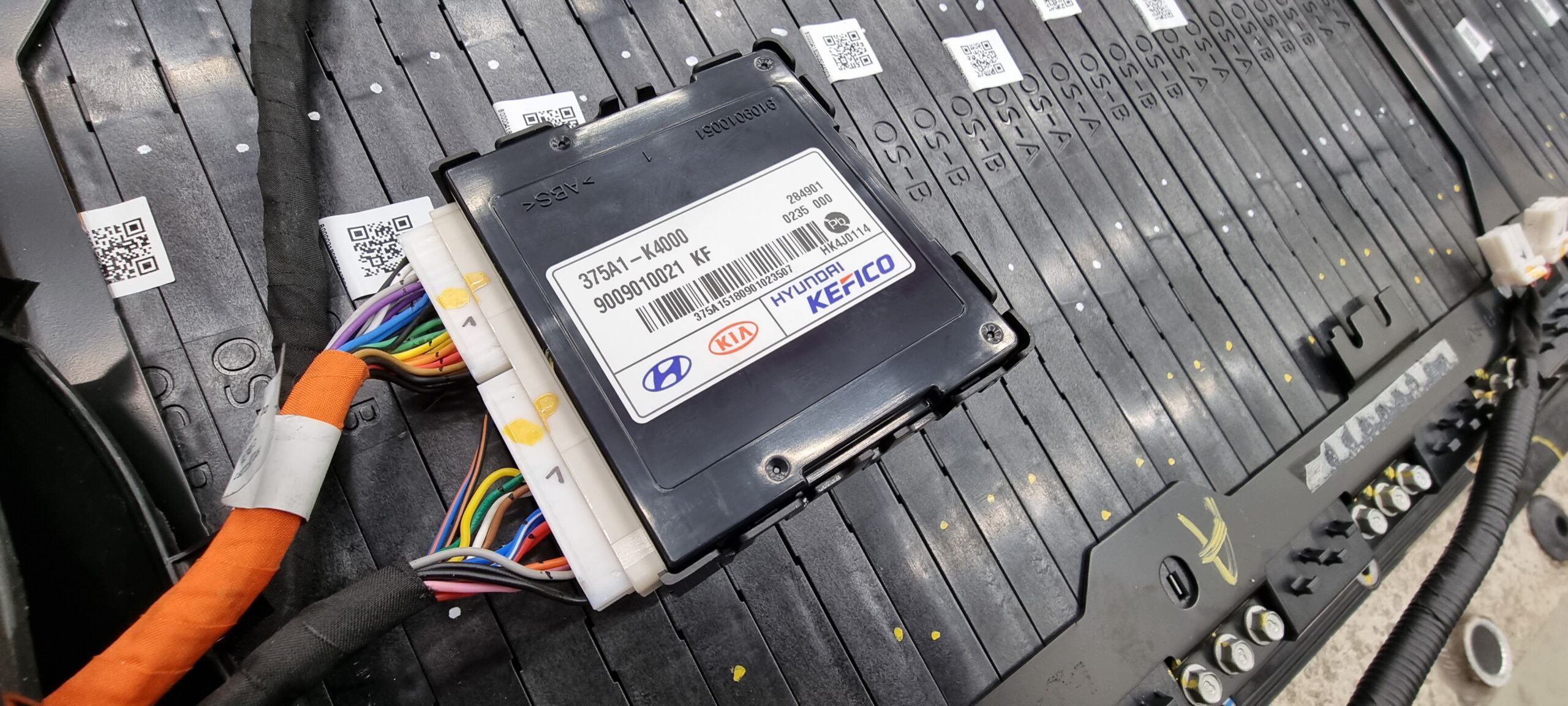
The modules themselves have no “brains”: wires carry the voltage signals to each pair's BMS. There are several connector types. For reuse, it probably makes sense to keep the original wiring looms unless you can identify and source these ERNI connectors. With two modules connected, you can measure the voltage of almost every 3P cell group in the pair from either end. “Almost”, because a few groups in the middle didn't seem to be accessible separately. Or at least I didn't manage to find every voltage at the connectors during my quick checks.
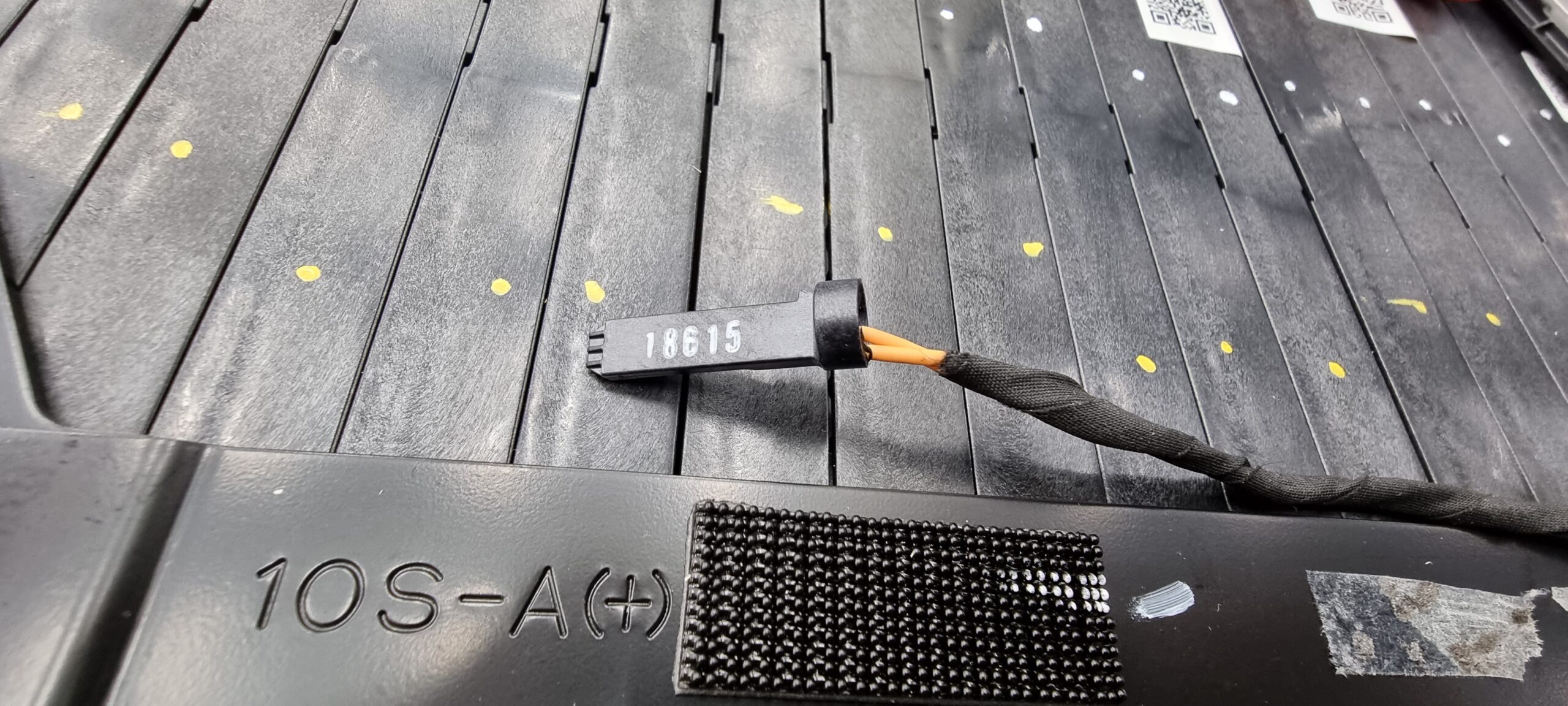
Temperature monitoring is fairly limited. Four module pairs each have one temperature sensor, while one has none. There is also a sensor in the glycol circuit. That is quite sparse compared with, for example, the two sensors in each of Tesla’s 16 modules.
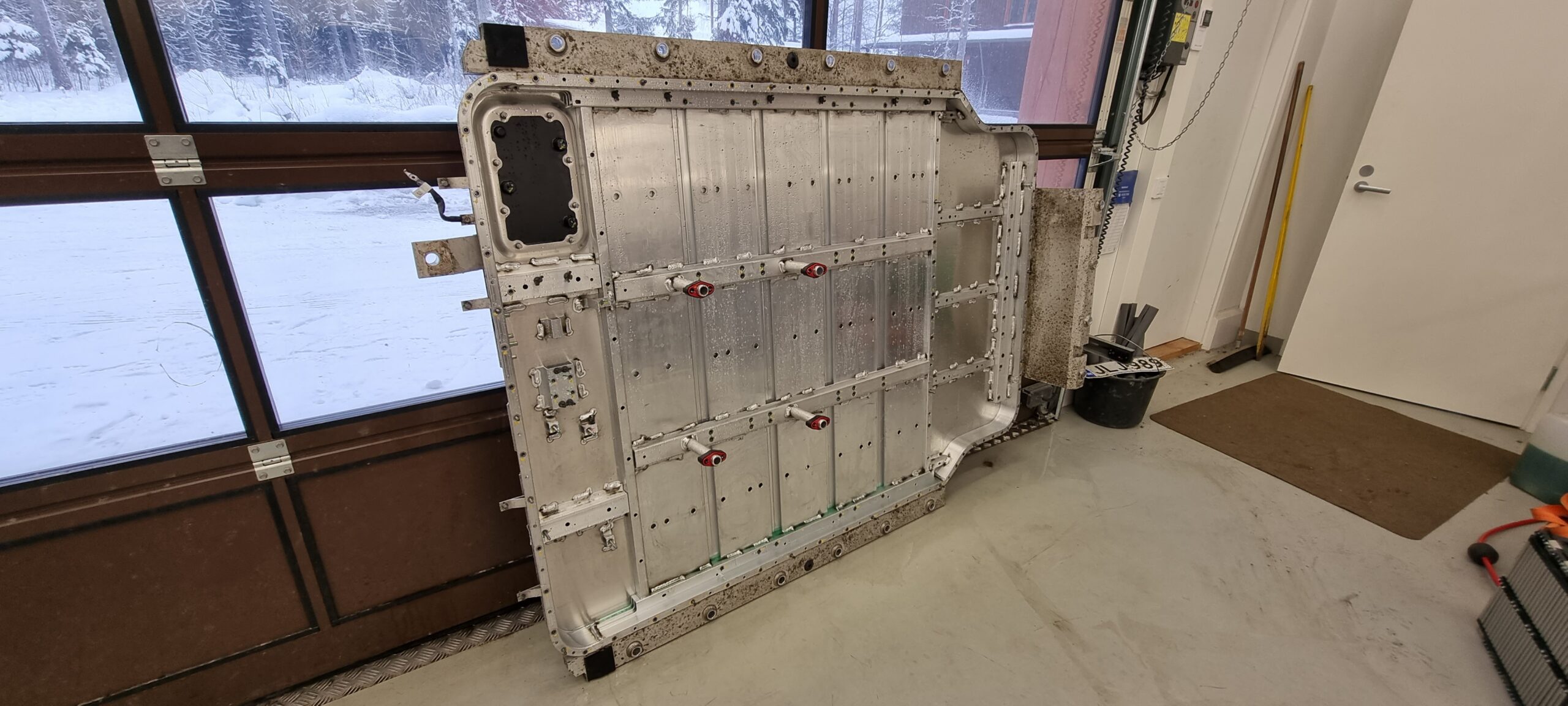
The base is 7 mm thick aluminium. Including the rest of the structure, the cells sit about 40 mm above the underside. You'd have to hit rocks pretty hard to seriously damage the cells. There are decent reinforcements around the sides for side impacts too.
We've previously dismantled batteries from a Model S, BMW i3 and Renault Zoe. Each is different; we'll try to share photos of those too. These Kona modules look promising for reuse, in an EV conversion or perhaps as a building's backup battery. The M5 bolts make connections easy. Getting cell-voltage signals to a BMS takes a little wiring work, either making a loom or using the original one if suitable connectors can be found. Investigating the CAN bus might also let us reuse the Kona's own BMS, but we haven't found any ready-made information on that.
The existing cooling plates also make it possible to add cooling for higher-current use.
If you're interested, we'd be willing to sell these modules — one of them is fully dismantled. They seem to be changing hands in Europe for around €130/kWh. Get in touch: heikki@pajalle.com / 040-500 6228.
Disclaimer: Hyundai has had a recall campaign for LG batteries, in which they have been replaced under warranty, because some of Hyundai's electric cars have caught fire. So we don't recommend these, for example, as a backup battery for a residential property without a proper BMS that can measure insulation resistance and other essential safety-related issues.
Includes original English text and AI-assisted translations.